Friday, June 24, 2016

Dream Cast - Frankenstein

TFW your dad is the sullen youth in your relationship

Just over a week ago, on a Thursday, I was getting ready to go to work. Having just finished Ann Leckie's Ancillary Justice trilogy, I needed a new read for my commute. I grabbed my high school paperback of Mary Shelley's Frankenstein off the shelf. I'd been thinking about re-reading it for years, and recent Byronic research for something I'm writing and the fact that my sister watched and related to me the awful James McAvoy Victor Frankenstein movie made the novel fresh in my mind.

By complete coincidence (or was it - ominous music) that day, June 16, is the day some astronomers think Shelley first dreamed up the basis for her story.

From my vague remembrances of the book, I knew it was different than our popular conception of the Frankenstein story, but I had forgotten just how different it was. There's no castle, no Igor. Victor Frankenstein makes his first monster in his apartment at university and his second, unfinished monster in a crude hut in the remote Orkney Islands.

I had also forgotten (or just couldn't appreciate at the time) just how great the novel is. It's groundbreaking, compelling, thoughtful, and ambitious. Boris Karloff's monster is rooted in our pop culture, and Mel Brooks's Young Frankenstein will always be a favorite of mine, but I found myself wishing for an adaptation more faithful to Shelley's vision. Not only in theme and message, but in the 18th century setting and the powerful landscapes she describes in Switzerland, Germany, and Scotland.

Like I did with Wuthering Heights, I spent a lot of free time picking out my dream cast for my dream Frankenstein miniseries. Here are the fruits of my imagined labors:


Robert Walton - Nicholas Hoult


Who is Robert Walton? Good question! Walton is our narrator narrating other characters' narrations, much like Lockwood (who?) in Wuthering Heights. I didn't cast Lockwood in my Wuthering Heights dream cast because nobody cares about Lockwood, but I'll shrug and go to bat for Walton.

Frankenstein is actually an epistolary novel, a series of letters Walton sends to his beloved sister. He's setting off on a dangerous quest to find a shipping route through the North Pole, and is so excited! But, he tells his sister, although surrounded by men, he's sad not to have a special guy friend whose eyes he can gaze into as he reveals his feelings. :( Fortunately, one almost immediately shows up on an ice flow! This Elsa-sent buddy is none other than Victor Frankenstein, who eventually tells Walton his story. Later, Frankenstein's monster will also get the chance to unload on Walton.

Why use an actor like Nicholas Hoult for this comparatively small role? Because I think it's important to see how Walton is hearing Victor's story and what lessons he takes away from his encounter with the Monster. Although he's been somewhat blinded by his affection for Victor, does his meeting with the Monster alter his opinions? Walton doesn't put any of those final thoughts on paper, so it would be up to the actor's face to communicate Walton's mind. Any wide-eyed young actor could be slotted in this spot, but someone like Hoult could add depth.


Victor Frankenstein - Paul Dano


One thing that stood out to me about Frankenstein, when re-reading, is just how feckless Victor Frankenstein is. He's not exactly a man of action. Yes, when he discovers the secret to life, he passionately and manically works on his creature, but when it isn't what he wanted, he decides his best course of action is...avoidance. He literally just abandons his new, awake, conscious creation on the table and goes to bed. When the confused, lonely monster finds him in his bedroom, he sleeps outside and waits for the thing to leave his apartment.

This response isn't out of character for him. We've already seen him shrug off communication with the people he loves most in the world simply because it's not what he wants at the moment. Later, when a servant in his household is falsely accused of the murder of his little brother - a murder he knows his Monster has committed - he half-heartedly argues for her innocence without implicating himself in any way. When the Monster demands that Victor make him a companion, promising he'll take his new friend far from human civilization and live a vegan life in South America, Victor agrees...and then procrastinates for a year on the project while worrying about it the whole time.

Yet despite the fact that this entire disaster - which all of Victor's loved ones end up paying for with their lives - is literally of Victor's making, the depths of his despair do provoke pity. Dano could handle the range of this character - from fevered curiosity to sullen passivity to mental breakdowns - without campiness.


Frankenstein's Monster - Richard Armitage


While a green-skinned, boxy-skulled Frankenstein's Monster has become the popular image, Mary Shelley describes a creature who was supposed to be handsome - ravishing black hair, good teeth - but comes off as horrifying due to his outlandish size, runny eyes, and yellowish skin that clearly belongs to a cadaver. With some special effects (makeup, Andy Serkising, or both), naturally handsome Armitage could pull off this unsettling mix of greatness and ugliness. Also, while the Monster is usually depicted as inarticulate and lumbering, Shelley's monster has superhuman speed and grace.

The differences between the original Monster and the pop culture Monster aren't just visual. Shelley's is intellectual and complex. Just two years after his "birth," he's not only able to speak, but is a clever, erudite man who can talk circles around the sniveling Victor. His capacity to do good seems greater than Victor's, yet he is the one who chooses to murder again and again - not Victor. Like his creator, he is excellent at rationalizing his actions to himself and identifies with fallen angel Lucifer from Milton's Paradise Lost. I'd love for an adaptation to show the tragedy and humanity of this iconic creature.


Elizabeth Lavenza - Lea Seydoux

The orphaned daughter of Italian nobility, Elizabeth is adopted from an impoverished foster family by the Frankensteins as their "niece" and betrothed to Victor when they are both small children. It's an odd arrangement (like, don't do this today), but she loves her family and they love her. She keeps the family going after Mrs. Frankenstein's death and passionately advocates for the falsely accused Justine.

As with Justine (below), Elizabeth's virtue and strength make Victor's selfishness all the more visible. It would be all too easy in an adaptation to make this character a wilting violet doormat of a victim, which is why I'd want an actress of Leydoux's mettle to take the role (and be backed with a great writer and director, since this is my dream).


Henry Clerval - Sebastian Armesto 

Victor and Elizabeth grow up with their best friend, the less financially fortunate but romantically minded Henry Clerval. Happy, generous Henry loves stories about knights and heroes as a child. When he finally attains his dream of going to university to study Asian languages, he puts it off for a year without a thought to tend to Victor, who has suffered a nervous breakdown. Henry is sweet and oblivious, happily prancing across Europe on a road trip with Victor, who gloomily frets and collects body parts.

When thinking of whom I would cast as this character, I couldn't help but remember how - in a matter of moments - Armesto made hapless, puppy-eyed Lieutenant Mitaka memorable in Star Wars: The Force Awakens. Sadly, Frankenstein's Monster will finish what Kylo Ren started. :( 


Justine Moritz - Morfydd Clark


Justine, a young woman scorned by her mother and brought into the Frankenstein family as a servant, becomes an early victim of the Monster when he frames her for murder and she is sentenced to death. Her grief and bewilderment is heartbreaking, and it would be easy to make this minor character a one-note victim. However, her ultimate courage in the face of death is in contrast to Victor's continued cowardliness. I'd trust Clark, from Love & Friendship and Josie Rourke's Les Liaisons Dangereuses, to show both innocence and strength.


De Lacey Family


After being abandoned by Victor and chased by terrified villagers, the Monster hides out near a cottage. The inhabitants are the De Lacey family, and Shelley gives them a rich backstory. They are an aristocratic French family living in exile in the German countryside, and they consist of the blind patriarch, daughter Agatha, son Felix, and Felix's Arab-Turkish fiancee Safie. Despite suffering hardships that have left them in poverty, they are a loving, kind, musically gifted group. By spying on them for a year, the Monster learns how to speak, how to read, and the basics of human history. He comes to love the family and desperately wants to be accepted by them. Alas, his introduction to them goes horribly wrong, and he is rejected out of fear again.

I'd cast grizzled, stately Hugo Weaving as De Lacey; Adele Exarchopoulous and Jamie Bell as his two dutiful children; and Mandahla Rose as joyful Safie.


Mr. and Mrs. Frankenstein - Ralph Fiennes and Sheryl Lee


Mr. Frankenstein is a loving father who is distraught as he watches his oldest child descend into depression and then more severe mental illness. He's at a loss to determine the cause (no one suspects their child has learned the secret of sparking life and used it to make an eight-foot-tall creature that keeps killing people), but he doesn't give up on his son. At one point he has to travel from Switzerland to Ireland to pick up a hysterical Victor from a small-town prison, and he's completely supportive the whole time.

Even though Sheryl Lee's scene in Winter's Bone was brief, I was drawn to her warmth. I can see the Twin Peaks star as the matriarch of this adventurous, welcoming family. Given all that happens, it's probably a blessing this character dies of scarlet fever before everything goes to hell.


Image info:
Header image: Richard Armitage in Robin Hood, Paul Dano in War & Peace
All actor headshots: IMDB

Monday, June 20, 2016

The Bard and Batman: Stories We Tell Ourselves

That time the Joker went meta on some Shakespeare and then flew away.

I love Shakespeare, and I love Batman. I got to enjoy both these things over the weekend. On Saturday, I saw Cal Shakes's production of beloved comedy Much Ado About Nothing, in which the play itself became a play within a play. Then on Sunday I read somber graphic memoir Dark Night: A True Batman Story, in which a writer on Batman: The Animated Series grapples with the characters he's given voice to in the wake of a personal trauma.

While very disparate in tone and format, I couldn't help but notice how both works raised the questions of why we tell stories, and what we're really doing by telling them.


James Carpenter and Stacy Ross in Much Ado About Nothing

I saw my first Cal Shakes performance last year when, pining for the Oregon Shakespeare Festival, I realized it was dumb of me to not take greater advantage of the Bay Area theater scene. With its beautiful outdoor theater in Orinda and crowds of Shakespeare-psyched people, I felt right at home. When I learned they were doing one of my favorites this season, I was excited.

Lots (most?) of Shakespeare productions put a spin on the text. I've seen a Harlem Renaissance The Comedy of Errors at Oregon Shakespeare Festival; a 90s pop music Love's Labor's Lost at Silicon Valley Shakespeare; and sat through the biker gang version of Cymbeline where our tragically lost Anton Yelchin did a good job despite the blahness happening around him. This version of Much Ado About Nothing, a collaboration between writer Kenneth Lin and director Jackson Gay, is a brand-new cater-waiter version.

It starts with the end of the play - and behind the scenes. While Hero and Claudio's wedding wraps up off-stage, the catering staff (and the wedding singer, who's been stiffed on his pay) clean up. In verse written by Lin (which feels a little clunky, but what wouldn't next to Will?), they gossip about the events leading up to the wedding and start playfully impersonating their employers. Aided by props from the event photobooth, the co-workers are soon acting out the entire story.


Hero is slandered at the alter.

Gender-bending has always been a part of Shakespeare's work, and having the characters here play-act within their play puts a new and sensible twist on it. Class clown Benedick (or rather, the cater-waiter imitating Benedick) is played by a gangly-but-cool Stacy Ross. James Carpenter's sharp facial features more readily suggest Julius Caesar's Cassius, but he plays Beatrice with dignity and compassion.

The roles the catering staff play are a reflection on their personal relations. Ross and Carpenter's co-workers are clearly longtime adversaries, which is why they jump at the chance to insult each other under the guise of impersonating others. Safiya Fredericks and Denmo Ibrahim's characters are lovers who have hit a rough spot, which gets explored when they play Hero and Claudio. A crush develops between the wedding singer who gets roped into playing Don John (Patrick Alparone) and the catering employee who plays Borachio (Rami Margron), one of Don John's henchmen, and they flirt while scheming. This was my one disappointment: Don John's other henchman is Conrade, and we've now had two Much Ado movies where John and Conrade's "can you make no use of your discontent" scene has been sexy. By having Margron's character play Conrade instead of Borachio, it would be an official trend!

Overlooking that grievous oversight , Gay and Lin's production was a delight - clever, accessible, and joyous.


Less joyous, but life-affirming, is Paul Dini's Dark Night, illustrated by Eduardo Risso. In the 1990s, Paul Dini was a writer for Batman: The Animated Series, the great cartoon that brought us an art deco Gotham, Kevin Conroy as Batman, Mark Hamill as Joker, and Arleen Sorkin as a new character to the Batman canon: Harley Quinn. Also in the 1990s, Dini was mugged in an attack so violent he required facial reconstruction surgery.

Dini talks to us via a cartoon avatar in the vein of Scott McCloud in Understanding Comics. We learn that although he was experiencing creative and professional success at the time of the attack, he was struggling personally. In his narrative, the mugging not only adds new traumas, but brings into nightmarish focus lifelong problems: loneliness, self-destructive tendencies, and a lack of self-confidence.

The attack also leaves him in an existential quandary regarding his work. What's the point of superheroes if no one's there to actually save you when you need it? Why bother with cartoons if they do nothing to help in reality? He feels betrayed by his main characters: Batman was no hero to him, and Joker's villainy now repulses him.

Dini imagines himself both taunted and cajoled by his characters as they guide him through his lowest of lows. And gradually, he heals. He starts looking at his problems head-on instead of turning to denial and drink. He realizes that maybe Batman hasn't let him down after all, and that his work does have value.

On an extremely personal note, seeing the depth of these "conversations" between Dini and his characters and Dini and himself was somewhat of a relief to me. I always have characters in my head (confession: imaginary cover bands "play" all my iPod music for me, I know all of the bandmates' names, etc), and when I talk to myself as myself, I'm horrible to myself. If a friend was being talked to by a significant other the way I talk to myself, I'd tell them to get out of that relationship. I'd have the car running outside for their escape. It's a relief to know I'm not too weird (maybe just writer-weird) for the characters, and that others struggle with the awful self-talk too.

The book is a must for mature fans of Batman: The Animated Series, but its artistry, and its insight into creativity, mental health, and trauma, should earn it a wider audience.


Images:
Flying Falstaff Joker: art by Dick Sprang (really), Charles Paris, and Greg Theakston, originally from Batman #63 in 1951 (reprinted in The Greatest Joker Stories Ever Told)
Much Ado photos: photos by Alessandra Mello for Cal Shakes's Facebook
Dark Night cover: art by Eduardo Risso

Monday, May 9, 2016

Bloodline by Claudia Gray: a Star Wars Novel

I needed this. 


Semi-official Star Wars holiday May 4th (May the Fourth be with you) was celebrated in its earliest hours by me by reading. I bought Claudia Gray's Bloodline on May 3rd, the day it came out, and read it in more or less one sitting. I started the book on the bus ride home, went straight from the bus stop to bed to read, and stayed in bed until finished. Clearly I was quite swept up!

Ok, I did pause to check the news; the big story was that Ted Cruz had dropped out of the race and the GOP was in chaos, which was a little surreal considering the book's material.

Now that I've had some time to reflect on this political thriller centered on Princess/Senator/General Leia Organa and its drastic reframing of the perceived pre-The Force Awakens timeline, I have some vaguely organized thoughts.

Warning: everything beyond "basic summary" is 100% spoilers.


Basic Summary


The government the Rebellion risked everything for has created a few decades of peace, but since the illness and retirement of leader Mon Motha, it has descended into indulgence, inaction, and partisan politics. It seems impossible to find a system of government that can continuously serve everyone well - just like real life!

Middle-aged Senator Leia Organa is disillusioned and plans to quit. But before she leaves government, she agrees to investigate a lead about a possible new crime boss. Soon she realizes that this new organization goes far beyond gambling and racketeering. Leia must assemble a team of her own staff and across-the-aisle allies to identify and stop this new threat - all while being haunted by memories of her villainous birth father, Darth Vader, and her noble adopted father, Bail Organa.

The novel by Claudia Gray takes ideas and guidelines from Lucasfilm creative executive Pablo Hidalgo and his team, senior editor Jennifer Heddle, and upcoming Episode VIII director Rian Johnson.


Spoilers ahead!


Politics and Characters


Leia: Gray has received lots of kudos for her characterization of Leia, and with good reason. Leia in Bloodline is a character we don't see often: a middle-aged, female action hero. She's tough, caring, but tired - she's been working for the good of the galaxy since her teen years, and has persevered in spite of multiple, devastating losses. Gray truly puts the destruction of Alderaan in its horrific context. She also makes clear how and why Leia and Luke share such different feelings regarding their late birth father, Darth Vader/Anakin Skywalker.

And Gray's take on the infamous "slave Leia" scene and Jabba the Hutt's death is amazing. It involves the nickname "Huttslayer" and the space version of "the weird part of YouTube."

The Senate: The politics in Bloodline are very on-point and believable. Reading about the partisan gridlock in the first few pages immediately brought John Boehner's teary face to mind, but the two "factions," the Centrists and Populists, aren't exactly carbon copies of America's Republicans and Democrats. The Centrists, while more Republican in nature (they love the military industrial complex and the death penalty), also want a strong central government. Meanwhile the Populists, although liberal, have more of a Republican "states' rights" stance.

Ransolm Casterfo: The snazzily dressed young Centrist and collector of Imperial artifacts strikes up a rivalry - and then friendship - with mature Populist Leia. While they never cross into "affair" territory, certain scenes had "Mrs. Robinson" playing in my head - especially their late-night video chat when Leia's in her housecoat and Ransolm's in his sweaty gym clothes. Hot damn. But seriously, although Ransolm was apparently cut from The Force Awakens, Gray has made him a breakout character here.


Here's to you, Senator Organa.


Lady Carise: Royalty-obsessed senator Lady Carise Sindian is gradually revealed to be the book's true villain, but even Leia doesn't know how far her scheming goes. A Centrist, Carise goads Ransolm into publicly revealing that Leia's father is Darth Vader (a fact not even Leia's son Ben knew), then has Ransolm disposed of. We learn that she is the senate contact for the First Order, the shadowy organization rising from the ashes of the Empire.

Will we eventually see Carise in the movies? Ben/Kylo Ren working alongside her biggest political enemy would definitely be another twist of the knife for Leia.

Korrie: Did you care about Korr Sella, the politician we saw two seconds of in The Force Awakens right when General Hux of the First Order blows up Hosnian Prime? Well, now you've gotten to know her as an optimistic teen intern. And she's dead. :(

Everyone is dead: And guess who else is dead by The Force Awakens? Pretty much everyone new you met in this book! The only pilots we see in both Bloodline and The Force Awakens are old-timer Nien Nunb and newbie "Snap" Wexley, so it seems safe to say that terminally ill Greer and wet-behind-the-ears Joph are both dead following some sort of The Fault in Our Star Wars romance. 

Unless scapegoated senator Ransolm escaped the death penalty he himself signed into law, he's dead too. Also gone with Hosnian Prime: all of Leia's politician friends and the statue of Bail Organa she was so proud of.


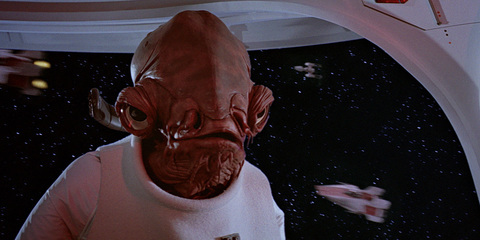
Dammit, Hux!


Timeline


Bloodline, which is set 6-7 years before The Force Awakens, really shook up the timeline fans had generally assumed from the small hints the movie gave us. Here are the biggest revelations.

The marriage: Han and Leia are living apart, but still married and in love in Bloodline. So when they reunite in The Force Awakens, they haven't actually been separated for too long. Leia stating in the film that she lost both Han and Ben when she sent Ben away had audiences thinking their relationship had gone south much earlier.

Nobody likes you when you're 23: Most surprising to me was that at around age 23, Ben Solo is still Ben Solo - not Kylo Ren. We know Snoke has been "watching" Ben since birth, and most had assumed Ben had left his family for Snoke and led the second Jedi massacre in his teens. But no, in his early twenties, he's still safely with Uncle Luke - either because he actually came to like living with Luke, is waiting to betray Luke on Snoke's orders, or is under some sort of space conservatorship like a space Britney Spears.


Han and Leia asked me to babysit. Said they'd be back by 10.


What's in a name: That Ben has possibly been under Luke's guardianship from childhood (the script, novelization, and YA novelization of The Force Awakens all mention that the first time Han sees Ben grown up is on Starkiller) all the way to young adulthood got me thinking about his name. In the now-scrapped "Expanded Universe," Luke (and Mara Jade) had a son, Ben Skywalker, so it was surprising when that name was given in this new story to Han and Leia's son (who is basically Jacen Solo from the EU). Maybe the name Ben reflects that Luke has raised him?

Sorry, Crylo: Because really, Han and Leia have pretty much moved on from Ben by Bloodline. It's unclear when exactly things went wrong (we learn that Ben was once a happy, normal child with friends), but at some point Leia and Han decided that they "couldn't" parent Ben, sent him to Luke, and filled the hole by mentoring other kids (politics-minded youth for Leia, young pilots for Han). Communication with their son is sporadic, and they rarely discuss him even with each other. He's with Luke, and that's that.


If you see our son...ask him what his name is again.


The Jedi: There's zero mention of the Jedi Order we learned Luke created and Kylo Ren destroyed in The Force Awakens. We know Luke and Ben are traveling during Bloodline, but they seem to be on their own. Has Luke not started his new Jedi academy yet?

New possible order of events: Ben learns from the damn news that his grandpa was Darth Vader, freaks out because he links his parents' fear of his powers and sending him away with his heritage (he's not wrong), runs away from Luke to Snoke, becomes Kylo Ren, and returns briefly to destroy Luke's new Jedi school. And meanwhile, Rey...

Rey: We get nada on Rey, which actually tells us a lot about Rey. This book throws a huge wrench in the "Rey is Luke's daughter" idea. Pablo Hidalgo has confirmed on twitter that Rey has been on Jakku for awhile during Bloodline, so she wasn't brought there in the aftermath of the Jedi massacre and wasn't even ever at Luke's Jedi academy. Unless Rey is a daughter Luke doesn't know about, she's someone else's kid.

Although we now know (I think?) nothing like this speculated scene by Jenny Dolfen ever happened, it's still frickin' gorgeous.


TFW your parents don't want you and you learn your grandpa was evil from
space twitter but then Andy Serkis gives you your dead grandpa's head and
puts you in mangement. 


So, those are my thoughts and speculations. We only have to wait until December 2017 to maybe find out the answers to our questions! >:(


My childhood music box with two childhood treasures it stores
Not pictured: plastic horse with missing tail, Ben


Image info:
Note: promotional material
Ackbar: StarWars.com
Leia: Wookieepedia
Korrie: Wookieepedia
Luke: Geek
Leia and Han: Disneyexaminer
Knights of Ren: ScreenRant
Leia and Han on lovely fairy music box: my own pic