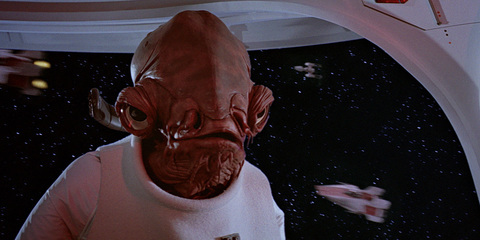
Showing posts with label star wars. Show all posts

Thursday, March 28, 2019

The Dead Gay Man: Burn This and Tom at the Farm

Choose your beefy, brooding blue-collar man
grieving his dead gay brother carefully.


When news broke that tickets were on sale for Burn This, a revival of a sexy, intense 1987 Lanford Wilson play starring Adam Driver and Keri Russell, I felt deeply envious of people who lived in or near New York. Those lucky people would be able to see film director favorite Adam Driver on the stage, where he started racking up accolades the moment he graduated from Julliard in 2009! They would get a preview of the chemistry between Kylo Ren and the new character played by Russell in Star Wars: Episode IX! Why couldn't I be like those fortunate ones? Then I remembered that planes were a thing.

So a month later I was in New York, in the Hudson Theatre, terrified that at the last minute they would announce that Driver had the flu or something. But that didn't happen, and the show began! Then a different thought came to mind. "Wait a second. Is this Tom at the Farm?"


A dream come true. That carpet, though.


Tom at the Farm, or Tom à la ferme, is a 2011 play by Quebecois playwright Michel Marc Bouchard. I was introduced to the play back in 2015 through Xavier Dolan's film adaptation. I eventually read the English translation, but found that it's a work where staging is really integral. (For this post, I'll mostly be going off of the Dolan film.)

I'm not suggesting plagiarism or anything like that. But let me explain: 

When Burn This starts, Robbie, the dance partner of Manhattan woman Anna, has died in an accident along with his boyfriend. Anna relates how she showed up at his funeral to discover her friend's conservative New Jersey family didn't know he was gay. They assumed/insisted that she was his girlfriend, and she found herself roped into spending the night at the family's house. Soon, she finds herself in a passionate yet ill-advised relationship with her deceased friend's volatile older brother, Pale, who knows his brother was gay and looks eerily like him.

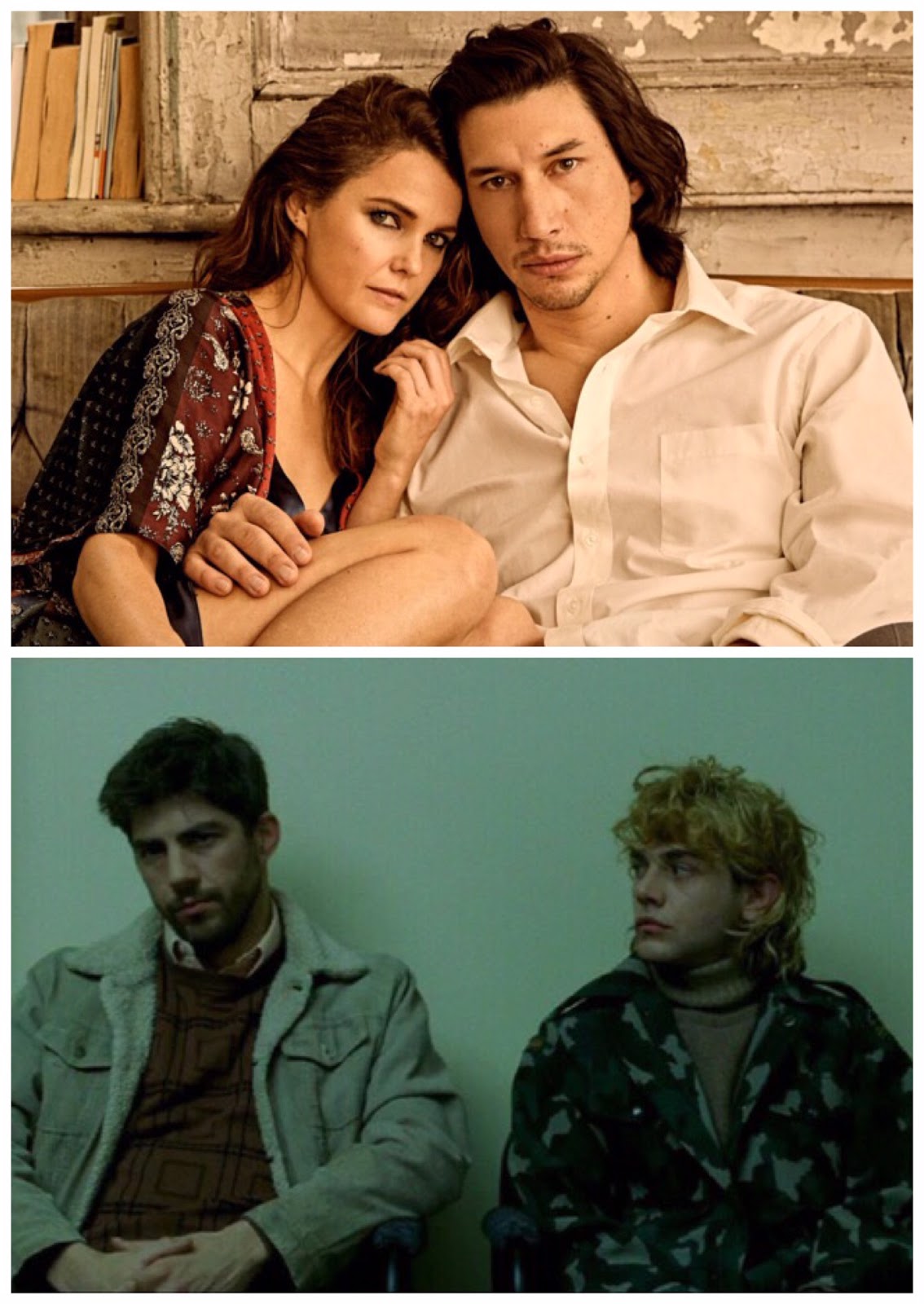
When Tom at the Farm starts, Guy, the boyfriend of Montreal man Tom, has died in an accident. Tom shows up at the funeral to discover his boyfriend's conservative rural Quebec family didn't know he was gay. They assume/insist that a female co-worker, Sarah, was his girlfriend, and Tom finds himself roped into getting Sarah to come to the family's house. Tom finds himself in a passionate yet ill-advised relationship with his deceased boyfriend's volatile older brother, Francis, who knows his brother was gay and looks eerily like him.

Both stories also have creepy dying animals (butterflies, cows), gay men in advertising, dancing, a hit 1980s song ("I'm on Fire" for Burn This, "Sunglasses at Night" for the Tom at the Farm movie), and a very important handwritten note on a scrap of paper.


Pierre-Ives Cardinal (Francis) and Xavier Dolan (Tom) in Tom at the Farm


What interests me about the parallels is that Tom at the Farm feels like it took the basic situation (cosmopolitan gay man dies, more "traditional" family is in denial about his sexuality, woman pressured into posing as his girlfriend) and re-centered on the gay characters, even bringing one back from the dead.

Gay characters in Burn This are important, but on the periphery from the main action. When the play starts, boyfriends Robbie and Dominic are already dead and buried. Larry, roommate to Anna and the late Robbie, is an important and scene-stealing character, but very much of the "sassy gay friend" trope. That he doesn't come off as too cartoonish in 2019 is due to Wilson's thoughtful writing and Brandon Uranowitz's performance. (In an interview, Uranowitz describes the part as "a dream role" and not in need of "modernizing.") Still, it's hard not to notice that Larry's function is mostly to provide humor and assist the heterosexual romance between Anna and Pale.

In Tom at the Farm (at least in the movie version), the analogous Pale/Anna tryst between Francis, the dead man's older brother, and Sarah, the co-worker who has to pretend to be the dead man's girlfriend, does occur, but as a quickie in a truck. The main focus is on the relationship between Tom and Francis. And whoo boy, what a relationship it is. The Anna and Pale relationship is a series of unstable, drunken, grief-fueled hookups, but is still miles healthier than what Tom and Francis get up to. While Pale, a sleep-deprived coke addict, is unpredictable and aggressive, Francis is downright sadistic and dangerous. No one is threatened with being thrown in a pit of dead cows in Burn This!


The Hudson Theatre


I don't know if Bouchard and/or Dolan were inspired by Wilson's play at all (I couldn't find any reference to this online), but the similarities in the stories at their bases are striking. Even if there is no connection, the contrasts between the two are so fascinating to me because they show how different storytellers can take one scenario and change it so much depending on whom they decide the protagonist is, which facet they choose to look through.

Burn This was 100% worth the weekend trip across the country. Seeing Driver act onstage was just as electrifying as I'd hoped. I was expecting his vulnerability and energy, but was surprised by his flawless comedic timing (maybe because I've never watched Girls?). The aforementioned Uranowitz was hilarious. David Furr, as Anna's wealthy screenwriter boyfriend Burton, brought an approachable humanity to the role. Russell didn't seem as natural onstage as her three Broadway-vet castmates, but she was still deeply affecting and has time to get more comfortable (the show is still in previews and officially opens April 16, running through July 14). 


Image info:
Header image: promo image for Burn This, screenshot of Tom at the Farm
Pic of program: mine
Tom at the Farm screenshot
Pic of Hudson Theatre: mine


Sunday, September 24, 2017

An Enigma in Chrome: Phasma by Delilah S. Dawson

"You'll do well in the First Order, Phasma."


"Is that a whole book about that one character?" a guy in line behind me at the bookstore asked as I handed Phasma by Delilah S. Dawson to the cashier.

One could argue whether his surprise was warranted or not. Despite the fact that Phasma was a visual standout in Star Wars: the Force Awakens - decked out in a chrome version of the iconic stormtrooper armor, played by 6'3" Gwendoline Christie - the character was a bit player. On the other hand, the choice to have an entire novel written about such a character feels like a throwback to the stories of the Star Wars Expanded Universe (now called Legends), where no character's appearance was too fleeting to merit a detailed backstory.

Still, Phasma has become a somewhat controversial character. Many fans compared her popularity with that of Boba Fett's - another character with a badass design, but with few badass feats actually accomplished on screen. Furthermore, Phasma came off as a bit of a coward - when Finn and Han order her at gunpoint to lower Starkiller Base's shields, she acquiesces rather than risk her life, leading to Starkiller's destruction. Especially considering the lack of a villainess in the Star Wars films, the character seemed like a missed opportunity.

But having read Dawson's novel, Phasma acting differently on Starkiller now seems inconceivable. Instead of ignoring that future action (Phasma is a prequel), Dawson plunges into the heart of it. While lots of stories deal with the aftermath of a moment of cowardice (the 2014 Swedish film Force Majeure, the 2011 German film The Loneliest Planet, Ann Leckie's Imperial Radch series of novels, etc), Dawson looks at what lead to it. By the time the novel is finished, Phasma lowering Starkiller's shields with a blaster pointed to her head is no longer evidence of weakness, but evidence of terrifying ruthlessness.


Her life, or the glory of the First Order? No question for Phasma.


Phasma opens with peppy, adorkable-ish (if you like that sort of thing) Resistance spy Vi Moradi's capture by the First Order. Once on the Resurgent-class Star Destroyer Absolution, she's taken to an off-the-record interrogation by Cardinal: a captain with solid red stormtrooper armor. Cardinal has one goal: to learn enough about Phasma to take her down. Vi has just left Phasma's home planet, Parnassos, on a mission to learn the same thing. Vi's narration of this information to Cardinal makes up most of the novel.

Before becoming Captain Phasma of the First Order, Phasma was part of a tribe called the Scyre in a blighted, toxic area of Parnassos, a planet that has suffered an apocalyptic event. The Scyre don't know the specifics of the disaster that happened generations earlier, but they doggedly eke out a living in their harsh coastal territory. Phasma and her brother Keldo rule the clan jointly, but there are cracks in their partnership: Phasma wants to expand their territory, while Keldo is satisfied with what they have.


Phasma's brother Keldo


That simmering conflict reaches a boiling point when First Order General Brendol Hux (father of future General Armitage Hux) and a few stormtroopers crash land on Parnassos. Imperious but diplomatic Brendol wows the clan with his stories of the First Order and how its medicine and technology can benefit them...if they help him back to his crashed ship. When Keldo refuses, Phasma rounds up some of her most trusted warriors and undertakes the task herself, abandoning the Scyre.

I've seen several readers compare Phasma to Mad Max: Fury Road, and Phasma, Brendol, and co.'s mad dash across the Parnassos wasteland warrants that. That isn't to say Dawson copies - her barren dystopia is its own place with a well thought-out history. As the group contends with the unforgiving environment and unpredictable encounters, Brendol and Phasma become closer and more conspiratorial. Soon, Phasma's followers wonder if they ever knew her at all.


Cardinal


Back on the Absolution, Cardinal must decide what to do with the information Vi has given him. He is loyal to the First Order, and he has good reasons: he was an orphan starving on Jakku (yes, Jakku!) before being taken in by the late Brendol Hux. He trains the children the First Order, um, "finds," and truly loves his young charges. With Cardinal, Dawson has given us an empathetic, moving look at "the other side" that might not be so "other" (I thought of David Schwarz's recent great essay, Burden of Empire: The Complex Relationship Between Star Wars and Fascism a lot while reading Cardinal's parts).

This novel is a must-read for those wanting to learn more about the mysterious First Order. The parts with Brendol and Armitage Hux build upon what we learned of them in Chuck Wendig's Aftermath: Empire's End (we even get insight into their different interior decorating aesthetics!). I feel particularly vindicated in my long-held assumption that the First Order is a lot like the school car in Bong Joon-ho's Snowpiercer, and Dawson throws in some Brave New World as well. There's still so much more to learn, however, that I hope will be revealed in The Last Jedi.

And thanks to Dawson, Phasma is now another reason I'm excited for The Last Jedi. I can't wait to see if Phasma's co-commanders, Armitage Hux and Kylo Ren, will learn the truth of what happened on Starkiller. If so, what will this cold-blooded killer do to continue her sole mission: keeping herself alive?


They've had better days. Sort of. A lot of their days have sucked.


Image info:

Header image and Finn & Phasma: StarWars.com
Keldo and Cardinal: promotional posters by James Zapata
Beleaguered First Order leadership: Annie Leibovitz for Vanity Fair 

Friday, March 3, 2017

Scavenging for Scraps: Star Wars Aftermath Empire's End

Grand Admiral Rae Sloane on a poster for the book


Chuck Wendig's Aftermath series is set immediately after Return of the Jedi, and comprises three novels, two with multiple colons: Star Wars: Aftermath, Star Wars: Aftermath: Life Debt, and Star Wars: Aftermath: Empire's End. I have to admit I did not read the first one, instead jumping in at Life Debt last year. Empire's End, the final book in this trilogy, came out on February 21, and I finished it recently.

Empire's End is not high art, and it's not supposed to be. I bought George Saunders's Lincoln in the Bardo at the same time, knowing I was buying apples and oranges. Or maybe champagne and popcorn. And as popcorn, Empire's End is fine. It's good popcorn, but not the best popcorn. The point is, like Life Debt (and I assume Aftermath before it, which was not well reviewed), Empire's End is a bit chaotic and messy. The writing can be slapdash. It's overstuffed with original characters in a way that made me feel like I was constantly being presented with David S. Pumpkins - but David S. Pumpkins within the context of his skit's world, not in our world where he has become an ironic but beloved and newly vital part of Halloween.

Also, Wendig uses the word "tailbone" a weird amount of times. I didn't count how many, but it is a lot.

However, Wendig had an assignment that was as much nightmare as dream, and he used that opportunity to give us a fuller, more diverse Star Wars universe that peers into corners across the galaxy. We have new characters to root for and new perspectives on established characters*. And ultimately, the last two books gave those ravenous for the next Star Wars movie some hints at what might be coming. To be completely honest, that's why I read Empire's End and Life Debt (and also Claudia Gray's Bloodline): a desire to mine the novels for any clues to to the mysteries that The Force Awakens left us with, and to stave off the hunger pains for The Last Jedi.

I'm not doing a full review for Empire's End, but I have some thoughts below, because what Star Wars fan doesn't have thoughts on something related to Star Wars? This post is fairly spoiler-lite, in my opinion, except for the fates of two characters (if you want a proper review with no spoilers, check out FANgirl).


Norra Wexley on the reverse of the poster


-Rae Sloane: The Empire's principled but ruthless Grand Admiral, first seen in A New Dawn by John Jackson Miller, has become a fan favorite through these books and the comics. This is the biggest spoiler I will give here, and it's that Sloane does not die. Yay! However, her fate is uncertain, since she is last seen going off to what we know will become the First Order, and it seems unlikely she would be on board with what the First Order does in The Force Awakens. I am really, really hoping that Thandie Newton's mystery role in the Han Solo film is a young Rae Sloane.

-Sinjir Rath Velus: Sinjir, a former Imperial loyalty officer (a.k.a. internal torturer) turned New Republic ally, is my favorite character from the Aftermath books. He's a cocky, erudite, humorous guy who loves alcohol and hot men and is trying to redeem himself (just not too much). He had better not have fucking been on Hosnian Prime when Armitage Hux blew it up, because I hope this character makes an appearance in Episodes VIII or IX. Sinjir would be a great role for some suave silver fox of a Middle Eastern or South Asian actor.

-Greg Grunberg: In the Aftermath books, Temmin "Snap" Wexley, son of Norra Wexley, is in his late teens. "Wait a second," I thought while reading Life Debt. "That timeline doesn't work. Leia's pregnant with Ben. Adam Driver, who plays Ben in The Force Awakens, is 33, and his character is 29. Greg Grunberg, who plays Snap, is what? Late 30s, maybe 40?" HE IS FIFTY YEARS OLD. Congrats on your genetic luck, you youthful-looking middle-aged geek-specialty actor.


Snap, not looking like he could have babysat infant Kylo Ren


-Kylo Ren/Ben Solo: Ben spends most of the books in Leia's uterus, where, it's hinted, he is already being tormented by the Dark Side and/or Snoke. Fun! When he's a newborn, he apparently likes his parents ok enough and smells like fresh towels. Seriously, there is a lot about how good "star baby" Ben smells.

-Armitage Hux: Kylo's future co-commander is four years old and also having a shit time. In Life Debt, we not only finally learned Hux's first name, but also that he's the illegitimate child his father (Brendol Hux, who ran the Empire's military academy) had with a household servant. Rax, the Empire's shadow leader, has Brendol and Armitage extracted from Arkanis because they need Brendol's troop-training abilities and, ominously, "children." Armitage is abused by Brendol, who is described as pretty much looking like Brendan Gleeson, because how the hell else would he look? (Armitage Hux is played by Domhnall Gleeson, Brendan's son.) Things start getting better, but also weirder, for Armitage when he's given, at four, a battalion of brainwashed feral children and then forms an alliance with Sloane. That's a lot to deal with pre-kindergarten, but you probably don't end up giving this speech if you had a normal childhood.


"Does he know I'm thinking about that time I almost wet myself?"


-Luke: Luke is not present. He's away doing Jedi things by himself. It's not even clear if he visits Han and Leia once Ben is born (it's reported as a "rumor" that he might have made a quick appearance). In Bloodline, he was away, for years, doing Jedi things with Ben. In The Force Awakens, he was away, for years, presumably doing Jedi things, again by himself. For all his time spent doing Jedi things, it sure doesn't seem like he's discovered anything useful, given the state of his family's lives, his own life, and the galaxy at large. What if he's just crazy and has been wandering around aimlessly for decades? What if when The Last Jedi starts, Luke is like, "Let me show you the ancient Jedi's most powerful artifact" to Rey and then hands her a fucking empty blue milk carton he found in the trash somewhere?

-Rey: As in Bloodline, we don't explicitly learn anything about Rey, but given what happens on Jakku and the hints of what's going on in the Unknown Regions, I think Rey's background is going to be bonkers. I think it is going to be batshit-bananas-bonkers, and I am waiting on tenterhooks.


*Edited to add: Wendig also does a great job handling two toxic properties of the Star Wars universe. One is a fitting coda to its most hated character. The other deals with a character originally from the dreaded Holiday Special. Can you guess who? If not not, you get a lump of coal in your stocking. Ho, ho, ho!


Images:
Rae Sloane and Norra Wexley posters: Star Wars Underworld
Snap: Star Wars official site
Hux and Kylo: Wookieepedia

Friday, December 23, 2016

Favorites of 2016

Ed Ruscha at the de Young, Seonna Hong at Hashimoto Contemporary,
Yuri on IceAll My Puny Sorrows, The Makropulos Case 


It's no secret that 2016 wasn't great. But here are the pieces of art and entertainment, from an ice skating anime to paintings in Milan, that I loved in this crazy year. 


Books


All My Puny Sorrows by Miriam Toews: One of my favorite books and one of my favorite movies this year are about suicide, but both in an oddly hopeful way. In All My Puny Sorrows, two middle-aged Mennonite sisters - struggling writer Yolandi and renowned pianist Elfreida - grapple with Elfreida's suicidal ideation and their family's long history of mental illness. This sounds like a dreary premise, but Toews's novel is full of warmth, humor, and fierce love. In a highlight, Yolandi furiously gives her sister the kind of defense most depressed people long for, but never get.

Hag-Seed by Margaret Atwood: As a The Tempest superfan, I was excited for Margaret Atwood's novel take on the Shakespeare play. The resulting work, Hag-Seed, is inventive and entertaining (if not terribly deep). When a smarmy board member removes egotistical but dedicated Felix from his role as artistic director of a theatre festival, Felix goes into hiding. But when he finds a job teaching Shakespeare to inmates at a local prison, he realizes how he could have his revenge.

Bloodline by Claudia Gray: Set seven-ish years before Star Wars: The Force Awakens, this eerily topical Star Wars novel captures, from Senator Leia Organa's point of view, the political tensions and escalating disasters that make way for the rise of the First Order.

Imperial Radch Trilogy by Ann Leckie: A spaceship trapped in a human body teams up with a drug-addicted former colleague in a quest for revenge: this is the story Ann Leckie tells in three beautiful page-turners. The trilogy is a masterclass in world-building; a breath-taking tour of imaginary planets, space stations, and cultures. Characters like measured, compassionate, quietly determined Breq; the sometimes heroic, sometimes a hot mess Seivarden; and zany, endlessly curious Translator Zeiat become quick favorites.

After dutifully carrying out a devastating order she wishes she hadn't and then losing her omniscience in a betrayal, former spaceship artificial intelligence system Breq tirelessly plots a course that will take her to the evil leader of the empire she once served. Along the way she gains companions and rights various social justice wrongs. The vision Leckie presents of a compassionate, justice-focused way of governing is enticing and needed, but her didactic impulse can get distracting as the trilogy continues (even on the climactic brink of a potentially existence-ending war, a lot of time and energy is devoted to browbeating an emotionally unstable character over a microaggression, for example).


Older Books I Read or Re-Read
Grace Marks (L), the subject of Atwood's novel

Alias Grace by Margaret Atwood: One of Atwood's finest, Alias Grace is based on real murders that happened near Toronto in 1843. Told by various narrators, newspaper clippings, and even some poetry, Atwood imagines the build-up to the crimes; the lengthy aftermath; and most importantly, the precarious and complicated lives of female servants.

Frankenstein by Mary Shelley: I revisited this classic on a whim, and got a little obsessed. (Bonus: on Halloween, I scored a reduced price ticket to San Francisco Ballet's forthcoming production of a ballet based on the novel!)

The Debacle (Le Debacle) by Emile Zola: Something I'm writing has required me to do a lot of research on the Franco-Prussian War, which lead to Zola's The Debacle. Because of this research I already knew the novel's ending, but I got so invested in the characters involved that I hoped I had misread it. I hadn't. :( The translation I read, by Leonard Tancock, was distracting (he makes the French peasants talk like English cockneys for some reason, like with them saying "tuppence" and everything), but the story of two Frances represented by two men who form an unlikely friendship on the battlefield is still powerful.

Zofloya by Charlotte Dacre and The Castle of Otranto by Horace Walpole: I read Zofloya for the Venetian setting when gearing up for a trip to Venice, and had no idea going in just how bonkers the 1806 Gothic novel would be. It is very bonkers, with murders, affairs, magic, kidnappings, and lovers clasping each other on top of a mountain while lightning flashes around them. But then I went back to what is considered the first Gothic novel, the 1764 The Castle of Otranto, which starts with a teenager getting killed on his wedding day by a giant flying helmet. That definitely takes the bonkers gold. Reading these made me better understand Jane Austen's Northanger Abbey, her 1817 novel in which a teenage heroine who devours these types of books sees Gothic drama in everything around her.


Movies
Arrival

Swiss Army Man: This bizarre, gross-out indie about a depressed man and a corpse is also deeply affecting.

Moonlight: "That shit was perfect," announced a man behind me when the end credits started to roll. It's hard to argue with that assessment of Barry Jenkins's reflective portrait in three acts of a gay boy growing to manhood in Miami's mix of drugs, danger, and beauty.

Arrival: I was a bigger mess during this movie than in 50/50, The Fault in Our Stars, or Liz in September, and cancer wasn't even mentioned. I cried at the beginning of the movie. I cried in the middle of the movie. I cried at the end of the movie. This film about a linguist hired to communicate with recently landed, cephalopod-like aliens is based on the Ted Chiang short story, "The Story of Your Life," and I'd suggest avoiding spoilers.

Hunt for the Wilderpeople: New Zealand director Taika Waititi, unlike many people, presumably had a good 2016. Not only was he filming Thor: Ragnarok, a hopefully lighter addition to the increasingly bogged-down MCU, but his adventure-comedy Hunt for the Wilderpeople was released. When it looks like Ricky - a city-raised foster kid who has finally found home at a rural farm - will be returned to the system, he and his cantankerous foster parent go on the run in the New Zealand bush.

Midnight Special: I am going to be totally honest and admit that I 100% saw this because Adam Driver is in it. He plays an awkward, studious government agent who is tracking down a boy, Alton, rumored to have strange powers. Also looking for the boy are representatives from the cult in which Alton was raised. Michael Shannon and Kirsten Dunst are Alton's parents, and chameleonic Joel Edgerton is a friend helping them flee. Like other artsy sci-fi films Arrival and Under the Skin, Midnight Special spends long moments lingering on its Earthen landscapes, in this case the American South at night. The shots of headlight-filled highways and glowing gas stations reminded me a lot of the Ed Ruscha show held at the de Young this year (below).


TV

Yuri on Ice: I'm not a big TV watcher, but I watched my usual stuff this year: South Park, Gotham, Drunk History, hours of HGTV in the background, etc. But what completely captured my heart (and judging my twitter feed, the hearts of girls from Japan to Mexico)? Ice skating anime Yuri on Ice.


Theater
Morfydd Clark and Janet McTeer in Les Liaisons Dangereuses


Les Liaisons Dangereuses - Donmar Warehouse: Josie Rourke and the Donmar Warehouse are British national treasures we're sometimes allowed access to via National Theatre Live. I loved Rourke's take on Coriolanus a few years back, and her production of Les Liaisons Dangereuses, Pierre Choderlos de Laclos's 1782 novel, was another stunner. (The show eventually made it to Broadway, but I saw it via telecast at the Lark Theater in Larkspur.) My favorite aspect of this production was how Rourke made use of what we know but the characters and Laclos did not: that in just a few years, the upper class's lives of luxurious boredom and bored excess would be upended by the French Revolution. As the play progresses, the sumptuous set is stripped bare, mirroring the protagonists' pretense and foretelling the storm to come. 


Much Ado About Nothing - Cal Shakes: This gender-bending, cater-waiter take on one of my favorite Shakespeare plays worked marvelously. 

King Lear - PacRep: I had no idea what to expect when my family decided to see some local theater while on a trip to Monterey, and was blown away by the caliber of acting and set design in this King Lear

The Makropulos Case - San Francisco Opera: The image of Nadja Michael in a Pierrot costume was enough to get me through the door for this 1926 Czech opera about a 300-year-old superstar looking to further extend her life. Michael's charisma makes the piece work, but I also truly touched by the story of the jaded diva and the everyday people who have been embroiled in a generations-long legal conflict partly of her making. 


Art
Detail from Seonna Hong's "Brotherhood of Men"

Musee Massena - Charlotte Salomon: Vie? Ou theatre?: The Musee Massena in Nice, France, celebrated the work of a young artist who once sought refuge nearby from Nazism.

Palazzo Reale - Simbolismo: When my sister and I stopped in Milan for the night on our way from Nice to Venice, we didn't do much research beforehand and didn't know what to expect. Along with the Duomo and finding the perfect duck umbrella, this exhibition of the beauty, weirdness, and sometimes gaudiness of the Symbolism movement was a highlight.

Fine Arts Museums San FranciscoEd Ruscha and the Great American West & Wild West: Plains to the Pacific: The de Young's Ruscha show focused on the artist's work capturing both the sprawl and emptiness of the American Southwest. Its sister exhibition at the Legion of Honor was a clear-eyed survey of the West through many artists.

Hashimoto Contemporary - Seonna Hong, In Our Nature: I was immediately taken by Hong's intriguing images of youths exploring minimalist landscapes in pinks, greens, and grays. I even ended up buying a 2.5 x 2.5" painting - an addition to my tiny collection of tiny original art.


Ancillary Mercy, Swiss Army Man, Bloodline,
Moonlight, Les Liaisons Dangereuses


Previous Favorites:
Favorites of 2015
Favorites of 2014


Images:
Header and footer collages made in LiveCollage
Grace Marks: Murderpedia 
Les Liaisons Dangereuses: photo by Johann Persson
Seonna Hong: my photo of Hong's painting "Brotherhood of Men"

Monday, May 9, 2016

Bloodline by Claudia Gray: a Star Wars Novel

I needed this. 


Semi-official Star Wars holiday May 4th (May the Fourth be with you) was celebrated in its earliest hours by me by reading. I bought Claudia Gray's Bloodline on May 3rd, the day it came out, and read it in more or less one sitting. I started the book on the bus ride home, went straight from the bus stop to bed to read, and stayed in bed until finished. Clearly I was quite swept up!

Ok, I did pause to check the news; the big story was that Ted Cruz had dropped out of the race and the GOP was in chaos, which was a little surreal considering the book's material.

Now that I've had some time to reflect on this political thriller centered on Princess/Senator/General Leia Organa and its drastic reframing of the perceived pre-The Force Awakens timeline, I have some vaguely organized thoughts.

Warning: everything beyond "basic summary" is 100% spoilers.


Basic Summary


The government the Rebellion risked everything for has created a few decades of peace, but since the illness and retirement of leader Mon Motha, it has descended into indulgence, inaction, and partisan politics. It seems impossible to find a system of government that can continuously serve everyone well - just like real life!

Middle-aged Senator Leia Organa is disillusioned and plans to quit. But before she leaves government, she agrees to investigate a lead about a possible new crime boss. Soon she realizes that this new organization goes far beyond gambling and racketeering. Leia must assemble a team of her own staff and across-the-aisle allies to identify and stop this new threat - all while being haunted by memories of her villainous birth father, Darth Vader, and her noble adopted father, Bail Organa.

The novel by Claudia Gray takes ideas and guidelines from Lucasfilm creative executive Pablo Hidalgo and his team, senior editor Jennifer Heddle, and upcoming Episode VIII director Rian Johnson.


Spoilers ahead!


Politics and Characters


Leia: Gray has received lots of kudos for her characterization of Leia, and with good reason. Leia in Bloodline is a character we don't see often: a middle-aged, female action hero. She's tough, caring, but tired - she's been working for the good of the galaxy since her teen years, and has persevered in spite of multiple, devastating losses. Gray truly puts the destruction of Alderaan in its horrific context. She also makes clear how and why Leia and Luke share such different feelings regarding their late birth father, Darth Vader/Anakin Skywalker.

And Gray's take on the infamous "slave Leia" scene and Jabba the Hutt's death is amazing. It involves the nickname "Huttslayer" and the space version of "the weird part of YouTube."

The Senate: The politics in Bloodline are very on-point and believable. Reading about the partisan gridlock in the first few pages immediately brought John Boehner's teary face to mind, but the two "factions," the Centrists and Populists, aren't exactly carbon copies of America's Republicans and Democrats. The Centrists, while more Republican in nature (they love the military industrial complex and the death penalty), also want a strong central government. Meanwhile the Populists, although liberal, have more of a Republican "states' rights" stance.

Ransolm Casterfo: The snazzily dressed young Centrist and collector of Imperial artifacts strikes up a rivalry - and then friendship - with mature Populist Leia. While they never cross into "affair" territory, certain scenes had "Mrs. Robinson" playing in my head - especially their late-night video chat when Leia's in her housecoat and Ransolm's in his sweaty gym clothes. Hot damn. But seriously, although Ransolm was apparently cut from The Force Awakens, Gray has made him a breakout character here.


Here's to you, Senator Organa.


Lady Carise: Royalty-obsessed senator Lady Carise Sindian is gradually revealed to be the book's true villain, but even Leia doesn't know how far her scheming goes. A Centrist, Carise goads Ransolm into publicly revealing that Leia's father is Darth Vader (a fact not even Leia's son Ben knew), then has Ransolm disposed of. We learn that she is the senate contact for the First Order, the shadowy organization rising from the ashes of the Empire.

Will we eventually see Carise in the movies? Ben/Kylo Ren working alongside her biggest political enemy would definitely be another twist of the knife for Leia.

Korrie: Did you care about Korr Sella, the politician we saw two seconds of in The Force Awakens right when General Hux of the First Order blows up Hosnian Prime? Well, now you've gotten to know her as an optimistic teen intern. And she's dead. :(

Everyone is dead: And guess who else is dead by The Force Awakens? Pretty much everyone new you met in this book! The only pilots we see in both Bloodline and The Force Awakens are old-timer Nien Nunb and newbie "Snap" Wexley, so it seems safe to say that terminally ill Greer and wet-behind-the-ears Joph are both dead following some sort of The Fault in Our Star Wars romance. 

Unless scapegoated senator Ransolm escaped the death penalty he himself signed into law, he's dead too. Also gone with Hosnian Prime: all of Leia's politician friends and the statue of Bail Organa she was so proud of.


Dammit, Hux!


Timeline


Bloodline, which is set 6-7 years before The Force Awakens, really shook up the timeline fans had generally assumed from the small hints the movie gave us. Here are the biggest revelations.

The marriage: Han and Leia are living apart, but still married and in love in Bloodline. So when they reunite in The Force Awakens, they haven't actually been separated for too long. Leia stating in the film that she lost both Han and Ben when she sent Ben away had audiences thinking their relationship had gone south much earlier.

Nobody likes you when you're 23: Most surprising to me was that at around age 23, Ben Solo is still Ben Solo - not Kylo Ren. We know Snoke has been "watching" Ben since birth, and most had assumed Ben had left his family for Snoke and led the second Jedi massacre in his teens. But no, in his early twenties, he's still safely with Uncle Luke - either because he actually came to like living with Luke, is waiting to betray Luke on Snoke's orders, or is under some sort of space conservatorship like a space Britney Spears.


Han and Leia asked me to babysit. Said they'd be back by 10.


What's in a name: That Ben has possibly been under Luke's guardianship from childhood (the script, novelization, and YA novelization of The Force Awakens all mention that the first time Han sees Ben grown up is on Starkiller) all the way to young adulthood got me thinking about his name. In the now-scrapped "Expanded Universe," Luke (and Mara Jade) had a son, Ben Skywalker, so it was surprising when that name was given in this new story to Han and Leia's son (who is basically Jacen Solo from the EU). Maybe the name Ben reflects that Luke has raised him?

Sorry, Crylo: Because really, Han and Leia have pretty much moved on from Ben by Bloodline. It's unclear when exactly things went wrong (we learn that Ben was once a happy, normal child with friends), but at some point Leia and Han decided that they "couldn't" parent Ben, sent him to Luke, and filled the hole by mentoring other kids (politics-minded youth for Leia, young pilots for Han). Communication with their son is sporadic, and they rarely discuss him even with each other. He's with Luke, and that's that.


If you see our son...ask him what his name is again.


The Jedi: There's zero mention of the Jedi Order we learned Luke created and Kylo Ren destroyed in The Force Awakens. We know Luke and Ben are traveling during Bloodline, but they seem to be on their own. Has Luke not started his new Jedi academy yet?

New possible order of events: Ben learns from the damn news that his grandpa was Darth Vader, freaks out because he links his parents' fear of his powers and sending him away with his heritage (he's not wrong), runs away from Luke to Snoke, becomes Kylo Ren, and returns briefly to destroy Luke's new Jedi school. And meanwhile, Rey...

Rey: We get nada on Rey, which actually tells us a lot about Rey. This book throws a huge wrench in the "Rey is Luke's daughter" idea. Pablo Hidalgo has confirmed on twitter that Rey has been on Jakku for awhile during Bloodline, so she wasn't brought there in the aftermath of the Jedi massacre and wasn't even ever at Luke's Jedi academy. Unless Rey is a daughter Luke doesn't know about, she's someone else's kid.

Although we now know (I think?) nothing like this speculated scene by Jenny Dolfen ever happened, it's still frickin' gorgeous.


TFW your parents don't want you and you learn your grandpa was evil from
space twitter but then Andy Serkis gives you your dead grandpa's head and
puts you in mangement. 


So, those are my thoughts and speculations. We only have to wait until December 2017 to maybe find out the answers to our questions! >:(


My childhood music box with two childhood treasures it stores
Not pictured: plastic horse with missing tail, Ben


Image info:
Note: promotional material
Ackbar: StarWars.com
Leia: Wookieepedia
Korrie: Wookieepedia
Luke: Geek
Leia and Han: Disneyexaminer
Knights of Ren: ScreenRant
Leia and Han on lovely fairy music box: my own pic