Showing posts with label theater. Show all posts

Thursday, March 28, 2019

The Dead Gay Man: Burn This and Tom at the Farm

Choose your beefy, brooding blue-collar man
grieving his dead gay brother carefully.


When news broke that tickets were on sale for Burn This, a revival of a sexy, intense 1987 Lanford Wilson play starring Adam Driver and Keri Russell, I felt deeply envious of people who lived in or near New York. Those lucky people would be able to see film director favorite Adam Driver on the stage, where he started racking up accolades the moment he graduated from Julliard in 2009! They would get a preview of the chemistry between Kylo Ren and the new character played by Russell in Star Wars: Episode IX! Why couldn't I be like those fortunate ones? Then I remembered that planes were a thing.

So a month later I was in New York, in the Hudson Theatre, terrified that at the last minute they would announce that Driver had the flu or something. But that didn't happen, and the show began! Then a different thought came to mind. "Wait a second. Is this Tom at the Farm?"


A dream come true. That carpet, though.


Tom at the Farm, or Tom à la ferme, is a 2011 play by Quebecois playwright Michel Marc Bouchard. I was introduced to the play back in 2015 through Xavier Dolan's film adaptation. I eventually read the English translation, but found that it's a work where staging is really integral. (For this post, I'll mostly be going off of the Dolan film.)

I'm not suggesting plagiarism or anything like that. But let me explain: 

When Burn This starts, Robbie, the dance partner of Manhattan woman Anna, has died in an accident along with his boyfriend. Anna relates how she showed up at his funeral to discover her friend's conservative New Jersey family didn't know he was gay. They assumed/insisted that she was his girlfriend, and she found herself roped into spending the night at the family's house. Soon, she finds herself in a passionate yet ill-advised relationship with her deceased friend's volatile older brother, Pale, who knows his brother was gay and looks eerily like him.

When Tom at the Farm starts, Guy, the boyfriend of Montreal man Tom, has died in an accident. Tom shows up at the funeral to discover his boyfriend's conservative rural Quebec family didn't know he was gay. They assume/insist that a female co-worker, Sarah, was his girlfriend, and Tom finds himself roped into getting Sarah to come to the family's house. Tom finds himself in a passionate yet ill-advised relationship with his deceased boyfriend's volatile older brother, Francis, who knows his brother was gay and looks eerily like him.

Both stories also have creepy dying animals (butterflies, cows), gay men in advertising, dancing, a hit 1980s song ("I'm on Fire" for Burn This, "Sunglasses at Night" for the Tom at the Farm movie), and a very important handwritten note on a scrap of paper.


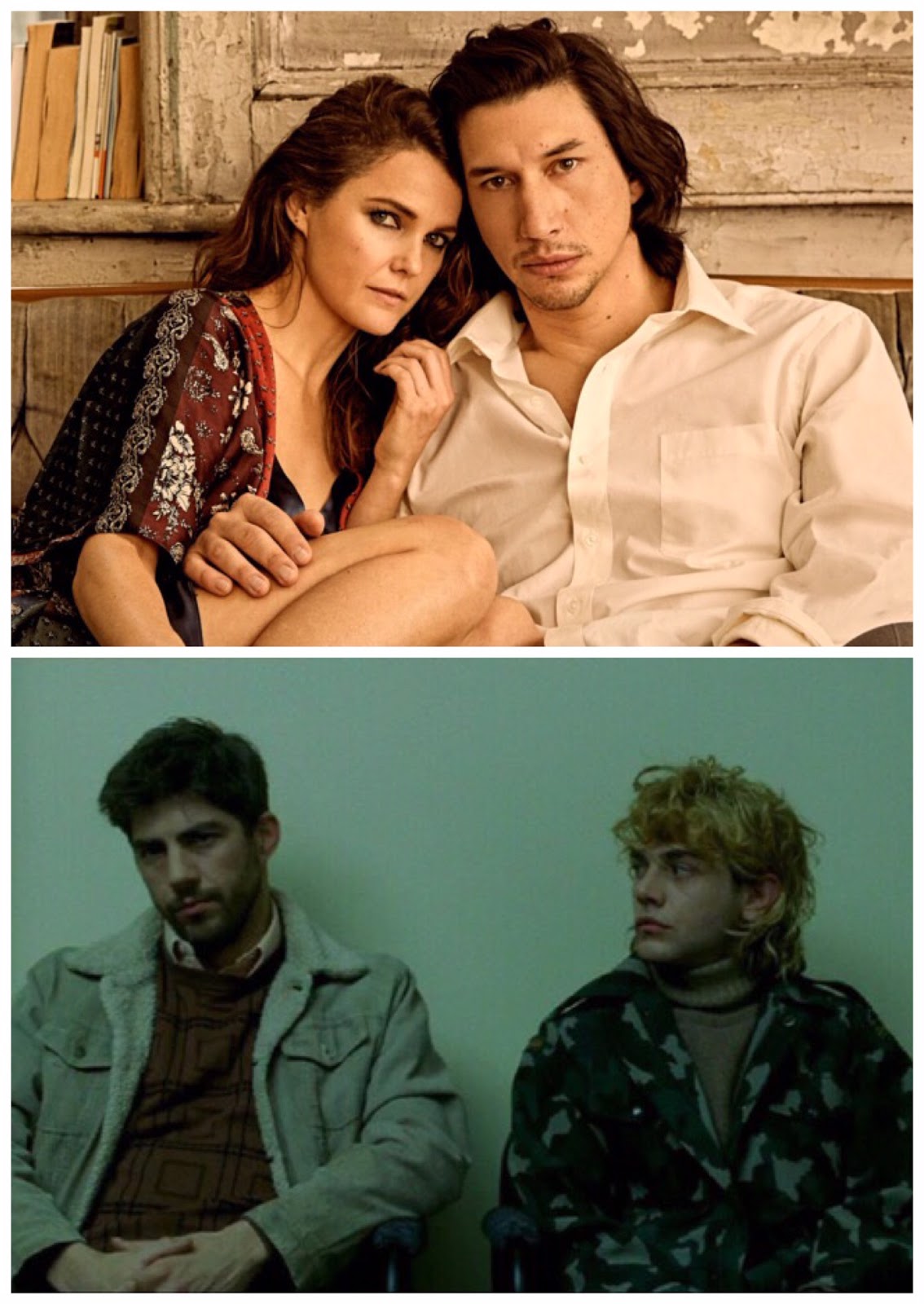
Pierre-Ives Cardinal (Francis) and Xavier Dolan (Tom) in Tom at the Farm


What interests me about the parallels is that Tom at the Farm feels like it took the basic situation (cosmopolitan gay man dies, more "traditional" family is in denial about his sexuality, woman pressured into posing as his girlfriend) and re-centered on the gay characters, even bringing one back from the dead.

Gay characters in Burn This are important, but on the periphery from the main action. When the play starts, boyfriends Robbie and Dominic are already dead and buried. Larry, roommate to Anna and the late Robbie, is an important and scene-stealing character, but very much of the "sassy gay friend" trope. That he doesn't come off as too cartoonish in 2019 is due to Wilson's thoughtful writing and Brandon Uranowitz's performance. (In an interview, Uranowitz describes the part as "a dream role" and not in need of "modernizing.") Still, it's hard not to notice that Larry's function is mostly to provide humor and assist the heterosexual romance between Anna and Pale.

In Tom at the Farm (at least in the movie version), the analogous Pale/Anna tryst between Francis, the dead man's older brother, and Sarah, the co-worker who has to pretend to be the dead man's girlfriend, does occur, but as a quickie in a truck. The main focus is on the relationship between Tom and Francis. And whoo boy, what a relationship it is. The Anna and Pale relationship is a series of unstable, drunken, grief-fueled hookups, but is still miles healthier than what Tom and Francis get up to. While Pale, a sleep-deprived coke addict, is unpredictable and aggressive, Francis is downright sadistic and dangerous. No one is threatened with being thrown in a pit of dead cows in Burn This!


The Hudson Theatre


I don't know if Bouchard and/or Dolan were inspired by Wilson's play at all (I couldn't find any reference to this online), but the similarities in the stories at their bases are striking. Even if there is no connection, the contrasts between the two are so fascinating to me because they show how different storytellers can take one scenario and change it so much depending on whom they decide the protagonist is, which facet they choose to look through.

Burn This was 100% worth the weekend trip across the country. Seeing Driver act onstage was just as electrifying as I'd hoped. I was expecting his vulnerability and energy, but was surprised by his flawless comedic timing (maybe because I've never watched Girls?). The aforementioned Uranowitz was hilarious. David Furr, as Anna's wealthy screenwriter boyfriend Burton, brought an approachable humanity to the role. Russell didn't seem as natural onstage as her three Broadway-vet castmates, but she was still deeply affecting and has time to get more comfortable (the show is still in previews and officially opens April 16, running through July 14). 


Image info:
Header image: promo image for Burn This, screenshot of Tom at the Farm
Pic of program: mine
Tom at the Farm screenshot
Pic of Hudson Theatre: mine


Monday, June 11, 2018

The Hunchback Musicals: A Rambling Yet Incomplete Comparison

From the Paper Mill Playhouse production of The Hunchback of Notre Dame


As a Notre-Dame de Paris/The Hunchback of Notre Dame superfan (there are dozens of us!), I was thrilled to finally get to see the updated Disney stage musical last week when it was put on by South Bay Musical Theatre. The community theater troupe pulled the show off with aplomb, mostly because of the cast's powerful voices - especially Jen Maggio as Esmeralda and Jay Steele as Frollo (Steele also had multiple roles behind the scenes, including graphic design and assistant master carpenter). The audience I sat in was dazzled, and shows sold out. Full disclosure: Christine Ormseth, who is a member of my childhood church, did the hair and makeup design and was in the ensemble. 

If you're not right on the pulse of the musical and/or Victor Hugo fan communities, you might ask what the updated Disney stage musical is. Remember the 1996 Disney movie The Hunchback of Notre Dame, which had almost nothing to do with Hugo's novel? If you don't, it had Frollo as a judge (instead of a priest, to pacify the Catholic church) who ended up taking in baby Quasimodo after he straight-up murdered Quasimodo's mother (rather than adopting Quasimodo to save him from Parisians who wanted to burn the ugly child to death); talking gargoyles (including one with saggy boobs); and most shocking of all, a happy ending.


No.


If you do remember it, it's probably due to two tour de force Alan Menken and Stephen Schwartz songs: "God Help the Outcasts" (sung by Heidi Mollenhauer) and incel classic "Hellfire" (sung by Tony Jay). Indeed, these songs belted out by Maggio and Steele were highlights of the South Bay Musical Theatre production. 

Disney first did a stage play of Hunchback in 1999 - in Berlin, in German. This version was similar to the movie, but had Esmeralda die. Then in 2014, a new version with a book by Peter Parnell premiered that was even closer to the novel. That doesn't mean, however, that there weren't some big changes...one of which was completely whackadoo. 


The production I saw 


When I opened my program, I was shocked (and delighted!) to see Jehan's name in the first song. Jehan Frollo, Claude Frollo's rebellious teen brother, probably gets chopped from adaptations more than Fleur-de-Lys (Phoebus's fiancee - more on that later), and at least she gets a starring role in the French Notre-Dame de Paris musical (more on that later as well). Jehan gets nothing! 

I always think this is a shame, because I kind of love Jehan. Yes, he's an asshole that I'd hate in real life, and at sixteen he's already a drunk mooch who has instigated his fellow students to carry out raids on wine shops, but he's also sassy, charismatic, and a good source of comic relief in a dark book. He's the first character we meet by name, and we meet him when he's hanging out on a column and heckling people during the interminable wait for a play to begin. 


There's our boy!

I gathered from the fact that he was only in one song in the program that he was possibly going to be killed off before his time, but I never would have predicted that The Hunchback of Notre Dame musical would make him...Quasimodo's father!

This is surprising and hilarious for two reasons:
  • Jehan hates Quasimodo
  • Jehan is about three-four years younger than Quasimodo

I'm guessing most people watching the musical didn't care that they made a character they had never heard of Quasimodo's dad, but I care. However, I don't disapprove. Mostly because it's hilarious for the above reasons (Jehan would be so mad and then make a great joke about it), but also because I get what they were going for by having Jehan and a Gypsy be Quasimodo's parents: correcting the way-off-base explanation for Frollo adopting Quasimodo, linking Quasimodo and Jehan in Frollo's mind (in the novel, Frollo decides to raise Quasimodo in honor of fellow orphan Jehan), keeping the movie's conceit that Frollo wants Quasimodo hidden, and explaining Frollo's bigotry towards Gypsies.


Frollo: anti-baby-burning killjoy


The Jehan inclusion highlights how much stuff is in Hugo's novel, and how adaptations have to pick and choose what to keep or cut. Do you try to work in how Frollo's madness is linked to alchemy and the dark arts? What about the whole part with Esmeralda's mother, a prostitute who is erroneously told that Gypsies ate her baby? There's a plethora of characters, subplots, and themes to choose from, so not surprisingly, another musical based on the same source is much different from this one.

Notre-Dame de Paris is a 1998 French musical (available on DVD!) by composer Riccardo Cocciante and lyricist Luc Plamondon and is basically the Gallic Phantom of the Opera. Despite not bothering with Jehan, the show is hugely popular in French-speaking countries, and its original cast will never be fully freed from the expectation of reunion concerts. 


Hope you all get along, original Hamilton cast!


As an excuse for me rambling some more, here are some other big differences between the two musicals. From here on out, the Disney/Menken musical The Hunchback of Notre Dame will be abbreviated as HoND, and the French musical Notre-Dame de Paris will be NDdP. 


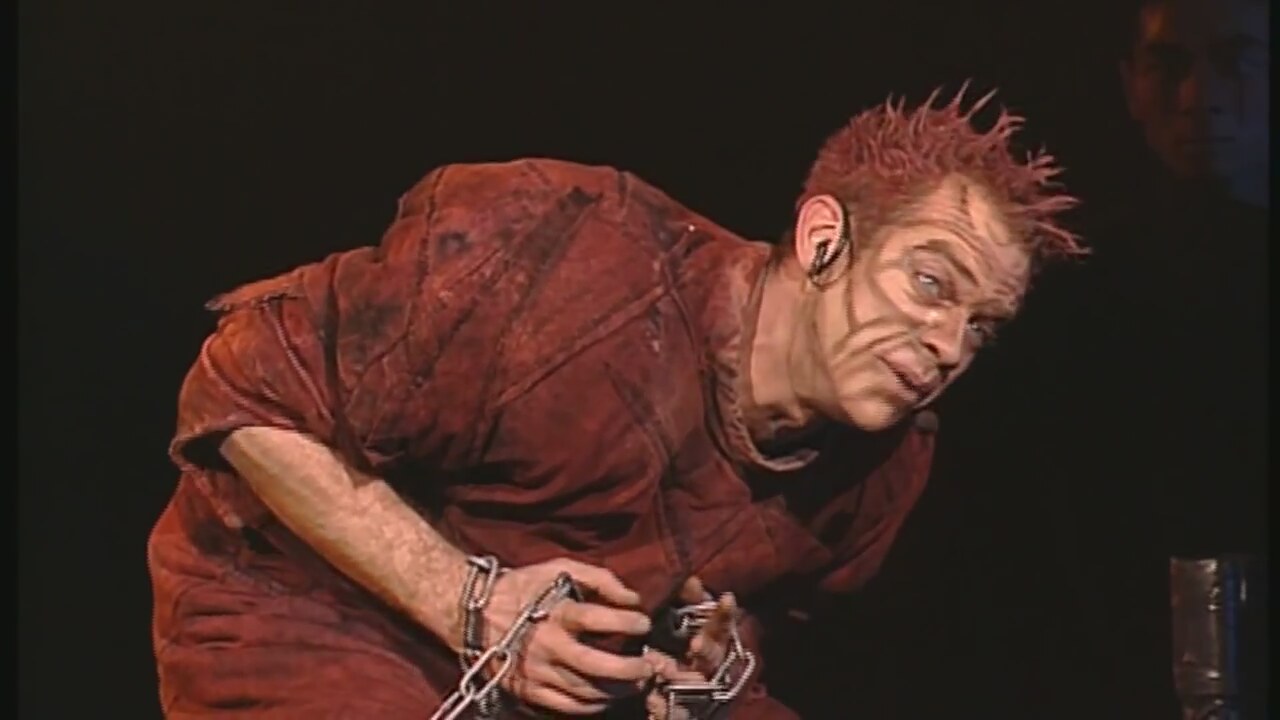
Garou as Quasimodo in NDdP

Quasimodo's Freedom

Something HoND carries over from the Disney movie is having Frollo keep Quasimodo hidden from public view and forbidding him to leave the cathedral. For the musical, this is a major plot point, encapsulated in the sweeping Out There. Will Quasimodo disobey Frollo and go out to the city on his own? How will he fare in the alien world outside the walls of Notre-Dame?

In the novel, this imprisonment simply isn't a thing. For one, novel Frollo lacks the social awareness to care what people think about him and his charge, and he actually has Quasimodo in the public eye way more than the public would like (when Frollo and Quasimodo go out on walks everyone talks behind their backs like they're Belle in Beauty and the Beast, except the Parisians think they're literally demonic instead of just weird).

Although disobeying an increasingly evil Frollo is still a major personal struggle for Quasimodo, he's otherwise no shrinking violet in the book; if someone makes fun of him, he picks them up and throws them. Problem solved! We don't get to see Quasimodo throw anyone in NDdP, but neither is he locked up like Rapunzel.

Point: NDdP


EJ Cardona and Josh Castille in the 5th Avenue production

Quasimodo's Deafness

The fact that Quasimodo is mostly deaf due to his lifelong love of giant bells has sometimes been left out of adaptations, but this is starting to be rectified. Not only does HoND acknowledge this by making him hard of hearing, but a current production at 5th Avenue Theatre in Seattle has cast Deaf actor Joshua Castille as Quasimodo. Castille uses American Sign Language in the play, which makes sense - in the novel, Quasimodo and Frollo converse with their own sign language. For Quasimodo's songs in the musical, one of his imaginary/statue friends (played by EJ Cardona) acts as his singing voice. (Update 6/16: here's a clip of Castille and Cardona at work.)

Point: HoND


Helene Segara as Esmeralda and Patrick Fiori as Phoebus in NDdP

Phoebus

The biggest change Disney made in their movie was having Esmeralda live and have a happy ending with good guy Phoebus. In HoND, even though Esmeralda dies, Phoebus still gets a hero role. He's a soldier with PTSD who learns to buck the system to stand up for what's right. This is in stark contrast to the novel, where he is a total fuckboy.

Novel Phoebus is engaged to aristocratic Fleur-de-Lys, but he screws around and parties a lot. (Jehan is one of his drinking buddies!) He has zero interest in anything more than sex with Esmeralda. When he gets stabbed by Frollo while trying to have that sex, he decides the affair isn't worth it and bails.

Although NDdP humanizes him a bit, it still keeps him deep in fuckboy territory and even gives him a fuckboy anthem, in which he explains at length to his fiancee why it is totally not his fault that he ended up in a hotel room with a different woman, who is now condemned to death.

Point: NDdP


Jeremy Stolle as aged-up Jehan in HoND for Paper Mill Playhouse,
Julie Zenatti as aged-down Fleur-de-Lys in NDdP


Often-Cut Characters

The only characters you really need for a Notre-Dame de Paris adaptation are Quasimodo, Esmeralda, and Frollo. An adaptation with only those three main characters would be quite minimalist, while using all of Hugo's characters would be difficult to juggle: there's a goat, there's Esmeralda's mom who lives in a hole, there's a whole subplot with Louis XI, there's a very funny Flemish hose-maker, etc. Neither HoND or NDdP risk putting a live goat onstage, but they do both use other supporting characters who don't always make the cut.

While I have to give HoND credit for the sheer ballsiness of their Jehan stunt from which I have still not recovered, and they include a quick Louis XI appearance, NDdP takes the gateau here. First of all, they put historical writer cameo Pierre Gringoire to work by having him narrate (they also make him way cooler than novel Gringoire, who is a hapless dork).

More importantly, the NdDP writers give voice to Fleur-de-Lys. Instead of giving Phoebus's fiancee the "bitch" treatment, they let her be human. The NDdP Fleur-de-Lys is giddy with love for Phoebus, but she's also very young and nervous about sex. Even in what could be seen as a villain moment - her song demanding Esmeralda be hanged - what really comes through in Julie Zenatti's masterful performance is her character's anguish and immaturity.

Point: NDdP


Nothing binds men together like singing "Belle" for the 1000th time.
Garou (Quasimodo), Daniel Lavoie (Frollo), and Patrick Fiori (Phoebus)

Music

Here's the big one! And...I'm not picking sides. Sort of. This one truly is a matter of taste. For HoND, you've got Menken's score made even more haunting and grand with a choir, repeatedly calling the epic cathedral itself to mind. Then you have the aforementioned "God Help the Outcasts" and "Hellfire," both unusually mature and complex for Disney songs. There are a slew of covers of these, including this badass metal Hellfire.

And in its corner, NDdP has "Belle," in which Quasimodo, Frollo, and Phoebus talk about how much they want to bone Esmeralda. It's hard to overstate this song's popularity in the francophone world. It came on the radio when my sister and I were in a restaurant in Bruges a year ago, which was awesome. It is to Garou, Daniel Lavoie, and Patrick Fiori what "Let it Go" is to Idina Menzel or "On My Own" is to Lea Salonga. There are endless videos of them singing it in concerts and fundraisers, but this one is typical: the audience loses its shit every time one of the guys come on, and the guys gaze adoringly/awkwardly at each other.

This isn't to say "Belle" is NDdP's only great song. The whole soundtrack is worthwhile, and I will say that its song about the place of ill repute Phoebus and Esmeralda plan to hook up in is way better than HoND's version. (Probably goes without saying, but unlike the French musical, the Disney staging does not include simulated sex.)

Point: whichever you prefer! 


The original NDdP cast in what appears to be a 90s sitcom


Anyway, to sum up: I am a crazy person and please watch a musical based on Victor Hugo's 1831 novel.

By the way, now might be an exciting time to join the Hunchback fandom. Idris Elba is producing, directing, and starring as Quasimodo (???) in a modern-day Netflix version, which is possibly also a musical? But Elba's not alone. Josh Brolin also wants to play Quasimodo, as does Tom Hollander. Is Quasimodo the new "it" role, like Hamlet or the Joker? Will any of these productions include Jehan? If so, The Hunchblog will probably have the news first.

In the meantime, here is a bonus character guide:


1) Quasimodo, 2) Jehan Frollo!, 3) Phoebus, 4) Fleur-de-Lys, 5) Chantefleurie/Sister Gudule (Esmeralda's mother), 6) Esmeralda, 7) Djali, 8) Pierre Gringoire, 9) Claude Frollo. (The man in the hat above him is possibly Clopin?)


Image info:

Jehan etching: Gustave Brion
Frollo with baby Quasimodo: Luc-Olivier Merson
The guys kissing: The Hunchblog of Notre Dame
Character guide: Aime de Lemud 


Sunday, February 19, 2017

Shelley Gets Her Due in Dance: Frankenstein the Ballet

A new version of Frankenstein's Creature

As someone who's been a little obsessive about Mary Shelley's Frankenstein, I was ecstatic when San Francisco Ballet announced last year that they would be staging Liam Scarlett's new ballet Frankenstein, which promo pics indicated would be close to the novel, in 2017. On Halloween, I scored a $45 orchestra ticket in a special sale and guarded it as if it held the secret to life. But in the final weeks before the North American premiere, I wasn't the only one shivering with antici...pation. I've never seen this much excitement about a ballet. Co-workers, my roommate's classmates, acquaintances on twitter: everyone wanted to see Frankenstein. I finally got to see the ballet on 2/18/17, and it did not disappoint.

The biggest draw for me was that unlike the many movie versions, Scarlett's ballet is deeply rooted in its source novel. The lack of an adaptation loyal to Shelley's work is why I ended up planning my dream cast, and this ballet is probably the closest fulfillment I'll get. There are no Igors; castle laboratories; or green, bolt-necked behemoths here. Instead, even with the changes needed for three acts of dance, we get Shelley's novel. We get the stories of Victor Frankenstein, a university student who messes up big time; of his loving family and friends, whom he loses; and of the tortured life he recklessly brings into the world.

Although its world premiere was less than a year ago, Frankenstein feels like an established classic. It's worth noting that Liam Scarlett is only 30. With young choreographers like him and Justin Peck, ballet's future looks bright.


Frances Chung as Elizabeth and Joseph Walsh as Victor

I looked at casting as soon as it was available, but I accidentally looked at the matinee, the casting for which were principals Aaron Robison as Victor, Dores Andre as Elizabeth, and Luke Ingham as the Creature. When I checked again before leaving on Saturday night, I realized my mistake, and saw the cast would be Max Cauthorn, Lauren Strongin, and Taras Domitro. "Who is Max Cauthorn?" I wondered. He's a corps member - and a young one at that, being just a few years out of San Francisco Ballet School. He's also the only non-principal in the role. Likewise, Lauren Strongin, a soloist, is the only non-principal Elizabeth. (Both are also Bay Area natives. High-five!)

While disappointed that I wouldn't get to see Dores Andre again after she was such a standout in Program 1, I looked forward to seeing Strongin and Cauthorn, who are possibly under consideration for promotion [update: Max Cauthorn was promoted to soloist on 3/13/17]. It's great to see home-grown former SF Ballet School students, like soloist Wei Wang, who was an apprentice the year before Cauthorn was, rise in the ranks. And (this is where I clarify that while a ballet fan, I am not a ballet expert) I really enjoyed Cauthorn's and Strongin's performances. They were lovely and youthful together, and their early effortlessness together made the emotional impact of Victor's later distraction and avoidance all the stronger.

Meanwhile Taras Domitro, in a scarred, nude bodysuit as the Creature, brought maturity and depth to his coltish, heartbreaking, menacing character. His pas de deux with Strongin, as his terrified would-be stepmother, and then with Cauthorn, as the immature father who regrets him, are both standouts. (Domitro isn't tall, but he's like 80% muscle, and Cauthorn seemed to have zero problems tossing him around like he was a willowy ballerina.)


From the original Royal Ballet production

Other things I loved:

-Henry Clerval! Although there was one huge Henry-related problem (see below), I was thrilled that happy, doomed puppy-dog Henry made the cut in this adaptation. Soloist Angelo Greco played Henry Saturday night, and brought lots of sweetness to the role.

-Justine Moritz! One element of Shelley's novel that Scarlett kept but altered was that Frankenstein family maid Justine Moritz's mother hates her. In the novel, Justine's mother is just part of her backstory, but in the ballet she's present as the housekeeper. Even though Victor and Elizabeth see Justine (soloist Julia Rowe) as a friend, Madame Moritz (soloist Jennifer Stahl) coldly and relentlessly keeps her daughter in her place as a servant.

Scarlett's reason for this subplot becomes clear at the end of Act II, when Madame Moritz's desperation, regret, and seconds-too-late arrival to Justine's execution add an absolute gut-punch. Characters danced by Stahl, who was promoted to soloist after her starring role in 2013's Rite of Spring, just have bad luck with executions.

-Music: composer Lowell Liebermann's music is sumptuous and intense.

-Anatomy Theatre scene: the anatomy lab dance, with a dizzying array of students, medical assistants, beakers, and body parts, is a visual delight with lots of great little details (the lechery of soloist James Sofranko's professor, an assistant's curiosity, Henry's queasiness).

-Talented kids: there are a few SF Ballet School students in this production, but the child dancer with the most time on stage last night was Jonathan Yee as Victor's little brother William. It's a demanding role for a kid, with lots of acting, a duet with the Creature, and a fair amount of time playing dead, and little Jonathan did great. Good job, Jonathan!


I've got some things to say about this

Things I didn't love:

-Here is the biggest problem the ballet had: Henry Clerval's costuming. The opening scenes establish Victor as wearing a red coat. He wears a red coat in childhood. He wears a red coat as a teenager. So when Act I, scene 3 starts at the university, and we see a guy with Victor's same wig wearing a red coat, it's obviously Victor, right? Wrong! It's Henry. When Victor arrives with his red notebook, everything becomes clear, but I was confused at first, and from what I overheard at intermission, a lot of people were.

Then in Act II, Henry is wearing a green coat. I will admit to owning more than one color of coat, but I'm not in a ballet where people in the balcony need to quickly recognize me. Since other characters' clothes stay similar throughout, why not just have him wear a green coat in Act I so we can easily distinguish him from Victor and the other neutral-wearing students? But the worst is yet to come. In Act III, he's wearing another, different red coat. You're killing me, costume designer John Macfarlane!

-Henry and Victor: also, I wish Victor and Henry's friendship had been better established in Act I. I feel that would have been a better use of scene 4, rather than the "college students gonna college student" episode in the tavern. Scarlett has Victor and Henry meet as freshmen rather than as children, but they barely interact before Victor's breakdown lands him back at home, at which point Henry is living with them and practically part of the family.


Liam Scarlett featurette with the Royal Ballet
SF Ballet's Vitor Luiz on dancing the Creature

Frankenstein continues at San Francisco Ballet through 2/26/17.

Image info:
Header: Erik Tomasson and AKA
Chung and Walsh: Erik Tomasson
Royal Ballet: Bill Cooper
Corps member Esteban Hernandez in that damn Act III coat: Erik Tomasson
Programs and tickets: my own crappy photo

Friday, December 23, 2016

Favorites of 2016

Ed Ruscha at the de Young, Seonna Hong at Hashimoto Contemporary,
Yuri on IceAll My Puny Sorrows, The Makropulos Case 


It's no secret that 2016 wasn't great. But here are the pieces of art and entertainment, from an ice skating anime to paintings in Milan, that I loved in this crazy year. 


Books


All My Puny Sorrows by Miriam Toews: One of my favorite books and one of my favorite movies this year are about suicide, but both in an oddly hopeful way. In All My Puny Sorrows, two middle-aged Mennonite sisters - struggling writer Yolandi and renowned pianist Elfreida - grapple with Elfreida's suicidal ideation and their family's long history of mental illness. This sounds like a dreary premise, but Toews's novel is full of warmth, humor, and fierce love. In a highlight, Yolandi furiously gives her sister the kind of defense most depressed people long for, but never get.

Hag-Seed by Margaret Atwood: As a The Tempest superfan, I was excited for Margaret Atwood's novel take on the Shakespeare play. The resulting work, Hag-Seed, is inventive and entertaining (if not terribly deep). When a smarmy board member removes egotistical but dedicated Felix from his role as artistic director of a theatre festival, Felix goes into hiding. But when he finds a job teaching Shakespeare to inmates at a local prison, he realizes how he could have his revenge.

Bloodline by Claudia Gray: Set seven-ish years before Star Wars: The Force Awakens, this eerily topical Star Wars novel captures, from Senator Leia Organa's point of view, the political tensions and escalating disasters that make way for the rise of the First Order.

Imperial Radch Trilogy by Ann Leckie: A spaceship trapped in a human body teams up with a drug-addicted former colleague in a quest for revenge: this is the story Ann Leckie tells in three beautiful page-turners. The trilogy is a masterclass in world-building; a breath-taking tour of imaginary planets, space stations, and cultures. Characters like measured, compassionate, quietly determined Breq; the sometimes heroic, sometimes a hot mess Seivarden; and zany, endlessly curious Translator Zeiat become quick favorites.

After dutifully carrying out a devastating order she wishes she hadn't and then losing her omniscience in a betrayal, former spaceship artificial intelligence system Breq tirelessly plots a course that will take her to the evil leader of the empire she once served. Along the way she gains companions and rights various social justice wrongs. The vision Leckie presents of a compassionate, justice-focused way of governing is enticing and needed, but her didactic impulse can get distracting as the trilogy continues (even on the climactic brink of a potentially existence-ending war, a lot of time and energy is devoted to browbeating an emotionally unstable character over a microaggression, for example).


Older Books I Read or Re-Read
Grace Marks (L), the subject of Atwood's novel

Alias Grace by Margaret Atwood: One of Atwood's finest, Alias Grace is based on real murders that happened near Toronto in 1843. Told by various narrators, newspaper clippings, and even some poetry, Atwood imagines the build-up to the crimes; the lengthy aftermath; and most importantly, the precarious and complicated lives of female servants.

Frankenstein by Mary Shelley: I revisited this classic on a whim, and got a little obsessed. (Bonus: on Halloween, I scored a reduced price ticket to San Francisco Ballet's forthcoming production of a ballet based on the novel!)

The Debacle (Le Debacle) by Emile Zola: Something I'm writing has required me to do a lot of research on the Franco-Prussian War, which lead to Zola's The Debacle. Because of this research I already knew the novel's ending, but I got so invested in the characters involved that I hoped I had misread it. I hadn't. :( The translation I read, by Leonard Tancock, was distracting (he makes the French peasants talk like English cockneys for some reason, like with them saying "tuppence" and everything), but the story of two Frances represented by two men who form an unlikely friendship on the battlefield is still powerful.

Zofloya by Charlotte Dacre and The Castle of Otranto by Horace Walpole: I read Zofloya for the Venetian setting when gearing up for a trip to Venice, and had no idea going in just how bonkers the 1806 Gothic novel would be. It is very bonkers, with murders, affairs, magic, kidnappings, and lovers clasping each other on top of a mountain while lightning flashes around them. But then I went back to what is considered the first Gothic novel, the 1764 The Castle of Otranto, which starts with a teenager getting killed on his wedding day by a giant flying helmet. That definitely takes the bonkers gold. Reading these made me better understand Jane Austen's Northanger Abbey, her 1817 novel in which a teenage heroine who devours these types of books sees Gothic drama in everything around her.


Movies
Arrival

Swiss Army Man: This bizarre, gross-out indie about a depressed man and a corpse is also deeply affecting.

Moonlight: "That shit was perfect," announced a man behind me when the end credits started to roll. It's hard to argue with that assessment of Barry Jenkins's reflective portrait in three acts of a gay boy growing to manhood in Miami's mix of drugs, danger, and beauty.

Arrival: I was a bigger mess during this movie than in 50/50, The Fault in Our Stars, or Liz in September, and cancer wasn't even mentioned. I cried at the beginning of the movie. I cried in the middle of the movie. I cried at the end of the movie. This film about a linguist hired to communicate with recently landed, cephalopod-like aliens is based on the Ted Chiang short story, "The Story of Your Life," and I'd suggest avoiding spoilers.

Hunt for the Wilderpeople: New Zealand director Taika Waititi, unlike many people, presumably had a good 2016. Not only was he filming Thor: Ragnarok, a hopefully lighter addition to the increasingly bogged-down MCU, but his adventure-comedy Hunt for the Wilderpeople was released. When it looks like Ricky - a city-raised foster kid who has finally found home at a rural farm - will be returned to the system, he and his cantankerous foster parent go on the run in the New Zealand bush.

Midnight Special: I am going to be totally honest and admit that I 100% saw this because Adam Driver is in it. He plays an awkward, studious government agent who is tracking down a boy, Alton, rumored to have strange powers. Also looking for the boy are representatives from the cult in which Alton was raised. Michael Shannon and Kirsten Dunst are Alton's parents, and chameleonic Joel Edgerton is a friend helping them flee. Like other artsy sci-fi films Arrival and Under the Skin, Midnight Special spends long moments lingering on its Earthen landscapes, in this case the American South at night. The shots of headlight-filled highways and glowing gas stations reminded me a lot of the Ed Ruscha show held at the de Young this year (below).


TV

Yuri on Ice: I'm not a big TV watcher, but I watched my usual stuff this year: South Park, Gotham, Drunk History, hours of HGTV in the background, etc. But what completely captured my heart (and judging my twitter feed, the hearts of girls from Japan to Mexico)? Ice skating anime Yuri on Ice.


Theater
Morfydd Clark and Janet McTeer in Les Liaisons Dangereuses


Les Liaisons Dangereuses - Donmar Warehouse: Josie Rourke and the Donmar Warehouse are British national treasures we're sometimes allowed access to via National Theatre Live. I loved Rourke's take on Coriolanus a few years back, and her production of Les Liaisons Dangereuses, Pierre Choderlos de Laclos's 1782 novel, was another stunner. (The show eventually made it to Broadway, but I saw it via telecast at the Lark Theater in Larkspur.) My favorite aspect of this production was how Rourke made use of what we know but the characters and Laclos did not: that in just a few years, the upper class's lives of luxurious boredom and bored excess would be upended by the French Revolution. As the play progresses, the sumptuous set is stripped bare, mirroring the protagonists' pretense and foretelling the storm to come. 


Much Ado About Nothing - Cal Shakes: This gender-bending, cater-waiter take on one of my favorite Shakespeare plays worked marvelously. 

King Lear - PacRep: I had no idea what to expect when my family decided to see some local theater while on a trip to Monterey, and was blown away by the caliber of acting and set design in this King Lear

The Makropulos Case - San Francisco Opera: The image of Nadja Michael in a Pierrot costume was enough to get me through the door for this 1926 Czech opera about a 300-year-old superstar looking to further extend her life. Michael's charisma makes the piece work, but I also truly touched by the story of the jaded diva and the everyday people who have been embroiled in a generations-long legal conflict partly of her making. 


Art
Detail from Seonna Hong's "Brotherhood of Men"

Musee Massena - Charlotte Salomon: Vie? Ou theatre?: The Musee Massena in Nice, France, celebrated the work of a young artist who once sought refuge nearby from Nazism.

Palazzo Reale - Simbolismo: When my sister and I stopped in Milan for the night on our way from Nice to Venice, we didn't do much research beforehand and didn't know what to expect. Along with the Duomo and finding the perfect duck umbrella, this exhibition of the beauty, weirdness, and sometimes gaudiness of the Symbolism movement was a highlight.

Fine Arts Museums San FranciscoEd Ruscha and the Great American West & Wild West: Plains to the Pacific: The de Young's Ruscha show focused on the artist's work capturing both the sprawl and emptiness of the American Southwest. Its sister exhibition at the Legion of Honor was a clear-eyed survey of the West through many artists.

Hashimoto Contemporary - Seonna Hong, In Our Nature: I was immediately taken by Hong's intriguing images of youths exploring minimalist landscapes in pinks, greens, and grays. I even ended up buying a 2.5 x 2.5" painting - an addition to my tiny collection of tiny original art.


Ancillary Mercy, Swiss Army Man, Bloodline,
Moonlight, Les Liaisons Dangereuses


Previous Favorites:
Favorites of 2015
Favorites of 2014


Images:
Header and footer collages made in LiveCollage
Grace Marks: Murderpedia 
Les Liaisons Dangereuses: photo by Johann Persson
Seonna Hong: my photo of Hong's painting "Brotherhood of Men"

Sunday, November 27, 2016

Dream Cast - The Tempest

Prospero with his magic staff; Miranda riding around the island;
where the bee sucks, there sucks Ariel

The Tempest is one of my favorite Shakespeare plays. I've seen multiple productions and re-read it over and over. I've written more than one poem about it, and the one that's published is about a character who is only mentioned once and probably due to a textual error. I've read W.H. Auden's goddamn The Sea and the Mirror. I also love Margaret Atwood. So I was elated to hear that Hogarth would be publishing her novelized take on the work under their new Hogarth Shakespeare imprint.

I bought the novel, Hag-Seed, the day it was released and devoured it quickly. Of course it's always a little worrying to see a new take on something old you love, but Hag-Seed is one of my favorites of the year. After Felix is ousted as the artistic director of the Makeshiweg Theatre Festival (if you're a Shakespeare festival aficionado, you'll know Atwood did her homework), he takes a job teaching Shakespeare in a prison, and plots his revenge.

Hag-Seed is clever and touching, but Atwood's take on The Tempest is different than mine would be. That's one of the reasons Shakespeare's plays endure on the stage and other media - they are open to countless interpretations. A character can be done so many ways. Reading the novel made me think of whom I would cast, and thus another overlong Dream Cast was born.


Prospero - Forest Whitacker

I have a soft spot for Forest Whitaker because, like him, I also have a wonky eyelid. That doesn't have anything to do with his acting credentials, but his career speaks for itself. Anyways, Prospero, like Lear and Shylock, is one of those Shakespeare roles distinguished actors of a certain age spend years paying their dues to play. Prospero is a bombastic egotist, passionate artist, cruel tyrant, doting father, and melancholy old man.

Prospero is also the rightful Duke of Milan and a sorcerer. Unfortunately, he is so into studying magic stuff that he doesn't notice his brother Antonio, whom he had assigned to run the kingdom, is going to usurp him. Cast out to sea with his daughter, Miranda, he lands on an enchanted island and declares himself ruler of it. When his enemies sail within his reach years later, he uses his magic to enact a complicated revenge. 


Miranda - Gugu Mbatha-Raw

We're getting flexible on the ages here, but whatever; it's Shakespeare. And anyways, if you landed on an island and saw Gugu Mbatha-Raw, you'd assume she was a goddess, right? Mbatha-Raw is in pretty much everything right now, because she's very talented. And that talent is needed to give Miranda her due. Miranda has some classic damsel moments (horror at a shipwreck, falling in love at first sight), but also shows pluck (standing up to Caliban, trying to help Ferdinand with his log-carrying).

Since toddlerhood, Miranda has been raised with no other women and with her father as the only other human. What might that mean for how Miranda acts, moves, and talks? There's a great but subtle moment in Mbatha-Raw's Black Mirror episode "San Junipero" where in anger, her character's idealized virtual reality avatar suddenly takes on her "real" mannerisms. That makes me think Mbatha-Raw could be a ground-breaking Miranda.


Caliban - Andy Serkis

Caliban has been a tricky role to cast in modern times. Caliban, born on an island in the Mediterranean and then subjugated by the first European who lands there, is read by many as a stand-in for aboriginal peoples. His is mother is an Algerian witch, but also described as blue-eyed, and critics have differing opinions on what that was meant to indicate. He's also an attempted rapist and gullible fool, so drawing too direct parallels is dicey.

For this Caliban, I'd go back to the text, which describes him as non-human and fish-like in appearance. For a fish monster, motion capture seems ideal, and for motion capture, you hire Andy Serkis. He's Hollywood's premier thespian working in this form, and he's got the chops for Caliban. Throughout the play we see Caliban as threatening, laughable, and rightfully enraged, and he also has one of the play's most moving speeches: an ode to the island's magic and beauty. 


Ariel - Kate McKinnon

Ariel is male in the text, but like fellow fairy Puck from A Midsummer Night's Dream, often played by a woman on stage. Whatever the gender, air sprite Ariel has both ethereal beauty and manic energy, so who better than Saturday Night Live's Kate McKinnon? Imprisoned by Caliban's mother, he is then freed by Prospero in exchange for a set time of service. Ariel is the real magic behind Prospero, and although he serves Prospero dutifully, his longing for freedom is clear.


Antonio - Anthony Mackie

Besties Antonio and Sebastian are two of my favorite villains in Shakespeare. Why do I like them so much? Imagine that Scar from The Lion King and Loki from the Marvel Cinematic Universe get stranded on an island with little chance of rescue and, instead of panicking, immediately launch into a Statler and Waldorf routine. That's Antonio and Sebastian. Later, when their treasonous plot against the king is foiled, they're upset for a few minutes, and then just go back to treating everything around them as their personal RiffTrax.

Antonio is the more conniving of the two. Put in charge of running Milan while his older brother Prospero doddered away in his library, slick and competent politician Antonio was able to organize a coup with the backing of the King of Naples. Mackie is charming, and you can see how he could pull off being a schemer, too.


Sebastian - Sebastian Stan

After their banter as Sam Wilson and Bucky Barnes in Captain America: Civil War, who doesn't want to see these two together again? And Anthony's name is close to Antonio and Sebastian's name is exactly Sebastian, so it's practically written in the stars!

Sebastian is the younger brother of Alonzo, but unlike Antonio, the thought of betraying his older brother to take the crown doesn't seem to have ever crossed his mind. That doesn't mean he's completely at peace with his brother, though. Sebastian is furious that his niece Claribel was pressured by her father to marry against her will in far-off Tunis, and he also blames Alonzo for the supposed death of Ferdinand. With Ferdinand thought dead, Antonio is easily able to convince Sebastian that it's no biggie to kill Alonzo and his annoying ally Gonzalo. Especially Gonzalo.


Alonzo - Jeffrey Dean Morgan

Jeffrey Dean Morgan has been terrifying and enraging viewers of The Walking Dead as sociopathic Negan. As King Alonzo of Naples, he could show his softer side as a ruthless ruler who then feels the full emotional weight of his tactics. Already regretting marrying off his daughter Claribel on another continent, Alonzo is sent into a tailspin of grief when his son Ferdinand is thought lost in the shipwreck during their return from the wedding. By the time he's reunited with his happily alive son in the final scene, he's a changed man.


Ferdinand - Alden Ehrenreich

In The Tempest, Ferdinand needs to be sad, and then be in love, and always be pretty. This prince has none of his father Alonzo's politicking (except in chess), and his marriage with Miranda will reunite the kingdoms of Naples and Milan in love instead of treachery. Alden Ehrenreich, a scene-stealer in Hail, Caesar! and our future past Han Solo, would fill the role nicely.


Gonzalo - George Takei

Gonzalo, an elderly adviser in Alonzo's court, is kindly and means well, but also a bit oblivious and a windbag. His non-stop speechifying makes him the subject of Antonio and Sebastian's jokes, and I have to admit I've thought of Sebastian's "[and yet] he will be talking" complaint when stuck listening to a chatterer. However, he is also the one who saved Prospero and Miranda during the coup and looks out for Alonzo, Antonio, and Sebastian when they're made insane by Ariel's magic. With his cheeriness and comic timing, George Takei would be a hoot in this role. 


Trinculo and Stefano - Key and Peele

Providing the comic relief are Trinculo and Stefano, King Alonzo's jester and butler who have also been shipwrecked on the magic island. The two get drunk, meet Caliban, and get Caliban drunk. Caliban thinks alcohol-bearing Stefano is a god, and convinces the two to help him overthrow Prospero. It's a perfect plan! Or it would be, if they weren't so drunk and easily distracted. Good chemistry and comedy skills are essential for these roles, so I'm choosing duo Key & Peele. I'd pick Keegan-Michael Key as Stefano and Jordan Peele as Trinculo, but honestly, they'd be hilarious either way.


Alonzo, Sebastian, and Antonio fight imaginary monsters courtesy Ariel
while Stephano and Trinculo enjoy island life


First collage:
Forest Whitaker in Rogue One: A Star Wars Story
Gugu Mbatha-Raw in Black Mirror
Kate McKinnon from The Hollywood Reporter

Headshots: all IMDB except Key & Peele official image

Second collage:
Jeffrey Dean Morgan in The Walking Dead
Anthony Mackie and Sebastian Stan in Captain America: Civil War
Keegan-Michael Key and Jordan Peele in Key & Peele


Monday, June 20, 2016

The Bard and Batman: Stories We Tell Ourselves

That time the Joker went meta on some Shakespeare and then flew away.

I love Shakespeare, and I love Batman. I got to enjoy both these things over the weekend. On Saturday, I saw Cal Shakes's production of beloved comedy Much Ado About Nothing, in which the play itself became a play within a play. Then on Sunday I read somber graphic memoir Dark Night: A True Batman Story, in which a writer on Batman: The Animated Series grapples with the characters he's given voice to in the wake of a personal trauma.

While very disparate in tone and format, I couldn't help but notice how both works raised the questions of why we tell stories, and what we're really doing by telling them.


James Carpenter and Stacy Ross in Much Ado About Nothing

I saw my first Cal Shakes performance last year when, pining for the Oregon Shakespeare Festival, I realized it was dumb of me to not take greater advantage of the Bay Area theater scene. With its beautiful outdoor theater in Orinda and crowds of Shakespeare-psyched people, I felt right at home. When I learned they were doing one of my favorites this season, I was excited.

Lots (most?) of Shakespeare productions put a spin on the text. I've seen a Harlem Renaissance The Comedy of Errors at Oregon Shakespeare Festival; a 90s pop music Love's Labor's Lost at Silicon Valley Shakespeare; and sat through the biker gang version of Cymbeline where our tragically lost Anton Yelchin did a good job despite the blahness happening around him. This version of Much Ado About Nothing, a collaboration between writer Kenneth Lin and director Jackson Gay, is a brand-new cater-waiter version.

It starts with the end of the play - and behind the scenes. While Hero and Claudio's wedding wraps up off-stage, the catering staff (and the wedding singer, who's been stiffed on his pay) clean up. In verse written by Lin (which feels a little clunky, but what wouldn't next to Will?), they gossip about the events leading up to the wedding and start playfully impersonating their employers. Aided by props from the event photobooth, the co-workers are soon acting out the entire story.


Hero is slandered at the alter.

Gender-bending has always been a part of Shakespeare's work, and having the characters here play-act within their play puts a new and sensible twist on it. Class clown Benedick (or rather, the cater-waiter imitating Benedick) is played by a gangly-but-cool Stacy Ross. James Carpenter's sharp facial features more readily suggest Julius Caesar's Cassius, but he plays Beatrice with dignity and compassion.

The roles the catering staff play are a reflection on their personal relations. Ross and Carpenter's co-workers are clearly longtime adversaries, which is why they jump at the chance to insult each other under the guise of impersonating others. Safiya Fredericks and Denmo Ibrahim's characters are lovers who have hit a rough spot, which gets explored when they play Hero and Claudio. A crush develops between the wedding singer who gets roped into playing Don John (Patrick Alparone) and the catering employee who plays Borachio (Rami Margron), one of Don John's henchmen, and they flirt while scheming. This was my one disappointment: Don John's other henchman is Conrade, and we've now had two Much Ado movies where John and Conrade's "can you make no use of your discontent" scene has been sexy. By having Margron's character play Conrade instead of Borachio, it would be an official trend!

Overlooking that grievous oversight , Gay and Lin's production was a delight - clever, accessible, and joyous.


Less joyous, but life-affirming, is Paul Dini's Dark Night, illustrated by Eduardo Risso. In the 1990s, Paul Dini was a writer for Batman: The Animated Series, the great cartoon that brought us an art deco Gotham, Kevin Conroy as Batman, Mark Hamill as Joker, and Arleen Sorkin as a new character to the Batman canon: Harley Quinn. Also in the 1990s, Dini was mugged in an attack so violent he required facial reconstruction surgery.

Dini talks to us via a cartoon avatar in the vein of Scott McCloud in Understanding Comics. We learn that although he was experiencing creative and professional success at the time of the attack, he was struggling personally. In his narrative, the mugging not only adds new traumas, but brings into nightmarish focus lifelong problems: loneliness, self-destructive tendencies, and a lack of self-confidence.

The attack also leaves him in an existential quandary regarding his work. What's the point of superheroes if no one's there to actually save you when you need it? Why bother with cartoons if they do nothing to help in reality? He feels betrayed by his main characters: Batman was no hero to him, and Joker's villainy now repulses him.

Dini imagines himself both taunted and cajoled by his characters as they guide him through his lowest of lows. And gradually, he heals. He starts looking at his problems head-on instead of turning to denial and drink. He realizes that maybe Batman hasn't let him down after all, and that his work does have value.

On an extremely personal note, seeing the depth of these "conversations" between Dini and his characters and Dini and himself was somewhat of a relief to me. I always have characters in my head (confession: imaginary cover bands "play" all my iPod music for me, I know all of the bandmates' names, etc), and when I talk to myself as myself, I'm horrible to myself. If a friend was being talked to by a significant other the way I talk to myself, I'd tell them to get out of that relationship. I'd have the car running outside for their escape. It's a relief to know I'm not too weird (maybe just writer-weird) for the characters, and that others struggle with the awful self-talk too.

The book is a must for mature fans of Batman: The Animated Series, but its artistry, and its insight into creativity, mental health, and trauma, should earn it a wider audience.


Images:
Flying Falstaff Joker: art by Dick Sprang (really), Charles Paris, and Greg Theakston, originally from Batman #63 in 1951 (reprinted in The Greatest Joker Stories Ever Told)
Much Ado photos: photos by Alessandra Mello for Cal Shakes's Facebook
Dark Night cover: art by Eduardo Risso